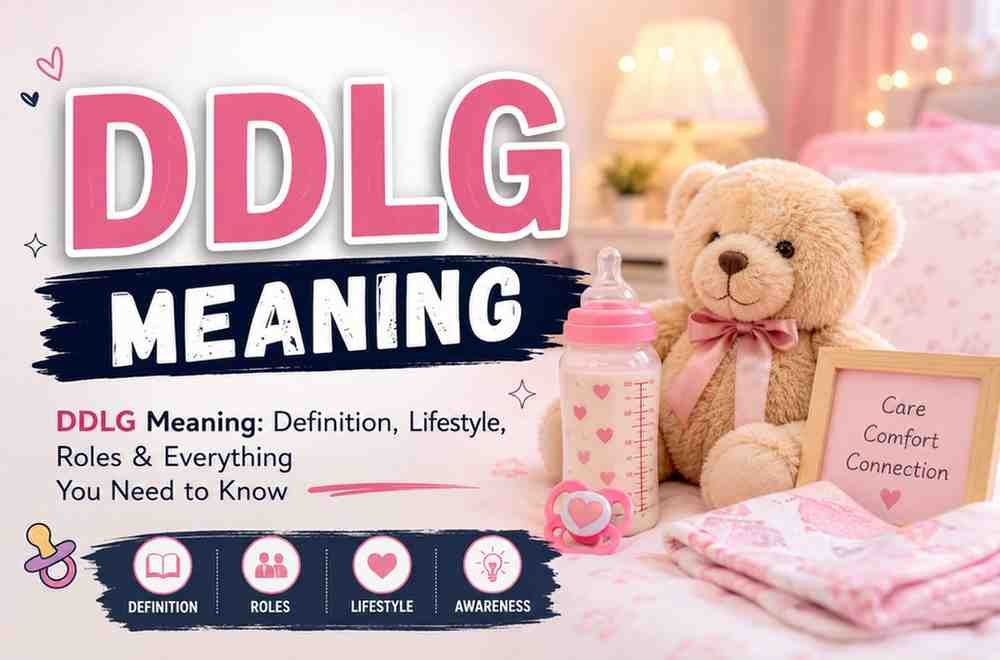
DDLG Meaning: A Clear Safe Guide to the Relationship Dynamic
Searching for a clear DDLG meaning often brings up confusing, judgmental, or overly clinical results. That uncertainty can leave you unsure whether this dynamic is healthy, safe, or right for you. This guide breaks down the real DDLG meaning, the roles, boundaries, and safety practices you need to understand it clearly and responsibly.
What Is DDLG Meaning? A Straightforward Definition
DDLG stands for Daddy Dom/Little Girl. The DDLG meaning refers to a consensual adult relationship dynamic where one partner takes a nurturing, protective, guiding role and the other explores a playful, younger-minded headspace called little space. This dynamic exists between adults only. It can include emotional care, structure, and sometimes power exchange, but it never involves minors.
The heart of the DDLG meaning is not age. It is the willing exchange of care and trust between two adults. Some people focus on the emotional side, while others include physical intimacy. Both approaches are valid as long as everyone consents clearly and continuously.
Where Did DDLG Come From? A Short History
DDLG grew out of broader caregiver/little, or CGL, communities within the BDSM world. Online forums and social platforms helped the term become more visible in the early 2000s. The National Coalition for Sexual Freedom states that consensual power exchange relationships have long existed in private communities and rely on negotiation, safety, and mutual respect.
The DDLG meaning became more specific over time. It separated itself from other caregiver dynamics by naming the Daddy Dom and Little roles directly. Today, the term describes a wide range of relationships, from highly structured and rule-based to soft, playful, and purely emotional.
The Core Roles in a DDLG Dynamic
Every DDLG relationship is unique, but most include at least two distinct roles.
- Daddy Dom or Caregiver: This adult provides guidance, emotional safety, structure, and often discipline. The role is nurturing first. Dominance may or may not be part of the relationship.
- Little: This adult explores a more playful, vulnerable, or childlike headspace. Being a Little is not about being immature in daily life. It is a chosen form of emotional expression.
- Switch: Some people move between the caregiver and Little roles depending on the relationship or the moment.
These roles describe adult behavior and adult choices. They do not describe actual children, and they never involve minors.
How DDLG Differs from Age Regression
Age regression and DDLG are not the same thing. Age regression is a psychological state where a person may think, feel, or behave as a younger version of themselves. It can be voluntary, but it can also happen involuntarily, especially in response to stress or trauma. AASECT-certified therapists often treat age regression as a mental health topic that requires professional sensitivity.
In DDLG, little space is usually a chosen headspace. The adult decides when and how to enter it. The DDLG meaning does not ignore mental health, but it also does not automatically mean someone has trauma or a disorder. Many people simply enjoy the emotional release, the trust, and the break from adult pressures.
What DDLG Is Not: Clearing Up Harmful Myths
Misinformation can make the DDLG meaning seem dangerous when it is not.
- Myth: DDLG involves minors.
Fact: DDLG is strictly between consenting adults. Any involvement of a minor is abuse and has nothing to do with DDLG. - Myth: Littles are childish or immature all the time.
Fact: Most Littles hold jobs, manage families, and live fully adult lives outside the dynamic. - Myth: DDLG is always sexual.
Fact: Many DDLG relationships are nonsexual or only lightly intimate. Emotional care is often the core. - Myth: DDLG is a mental illness.
Fact: Consensual adult role-play is not a disorder. The American Association of Sexuality Educators, Counselors and Therapists supports non-exploitative, consensual adult sexual and emotional expression.
Common DDLG Terms and What They Actually Mean
The table below breaks down common terms tied to the DDLG meaning.
| Term | What It Means |
|---|---|
| DDLG | A consensual adult dynamic between a Daddy Dom and a Little. |
| Daddy Dom | Adult who takes a guiding, nurturing, protective role. |
| Little | Adult who explores a playful, childlike headspace. |
| Caregiver | Gender-neutral term for the guiding partner. |
| Little space | The chosen headspace where a Little feels playful, safe, or small. |
| Age regression | A psychological shift that may be voluntary or involuntary; not the same as DDLG. |
| Rules | Agreed behaviors that create structure and safety. |
| Aftercare | Emotional and physical care after intense scenes or headspaces. |
| Safeword | A clear word or signal that stops the dynamic immediately. |
| Power exchange | Consensual transfer of control within agreed limits. |
Why Consent and Boundaries Matter More Than Labels
No label makes a relationship healthy. Consent does. The National Coalition for Sexual Freedom states that consent must be informed, enthusiastic, and revocable at any time. That means both partners understand the DDLG meaning, agree to the roles, and can stop without punishment or pressure.
Boundaries are the practical expression of consent. They cover what activities are okay, which words feel safe, and how the dynamic starts and ends. Without clear boundaries, even a caring label can hide control or manipulation. With boundaries, the dynamic becomes a source of safety rather than stress.
DDLG Rules: How Structure Builds Safety
A common part of the DDLG meaning is the structure that rules provide. Rules are not about micromanaging a partner. They create predictability and care.
- Keep rules clear, realistic, and easy to follow.
- Agree on consequences that are safe, kind, and consensual.
- Review rules weekly or monthly to see what works.
- Remove any rule that causes shame, fear, or resentment.
A simple rule like “text me when you get home” can strengthen trust. A harsh or unclear rule can damage it. The best rules serve the Little’s wellbeing and the relationship, not one partner’s ego.
Little Space: What It Feels Like and How It Works
Little space is a mental and emotional state. In this state, a Little may feel playful, creative, soft, or vulnerable. Activities might include coloring, watching cartoons, using comfort objects, or cuddling. The Kinsey Institute notes that adult intimacy includes emotional and psychological connection, not just physical acts.
For many people, little space reduces stress and allows a break from adult responsibilities. It is a chosen release, not a loss of control. The DDLG meaning includes this headspace as a central part of the dynamic, but it does not require it every day.
Aftercare: Why It Is Non-Negotiable
Aftercare is the care partners give each other after intense emotional or physical scenes. AASECT-certified professionals recommend aftercare to help partners transition out of intense headspaces and return to everyday life.
Good aftercare can include:
- Drinking water and eating something light.
- Resting under a blanket or in a quiet room.
- Talking about what felt good and what did not.
- Reassuring each other with words, touch, or silence.
- Scheduling a follow-up check-in the next day.
Skipping aftercare can leave someone feeling dropped, anxious, or disconnected. The DDLG meaning is not complete without this step.
How to Start Exploring DDLG Safely
If you want to explore DDLG, move slowly and stay honest.
- Educate yourself first. Read from trusted sources like the National Coalition for Sexual Freedom and AASECT.
- Talk openly with your partner. Share your desires, limits, fears, and questions.
- Start with one small nonsexual ritual. A daily check-in or a bedtime message can build trust.
- Choose a safeword or signal. Both partners must be able to pause or stop immediately.
- Schedule relationship check-ins outside the dynamic. Review what is working and adjust what is not.
Rushing into rules, punishments, or intense role-play can create confusion. The DDLG meaning becomes clearer when you build the dynamic one honest step at a time.
Healthy Communication in a DDLG Relationship
Communication is the strongest safety tool in any DDLG relationship. It keeps the dynamic consensual, flexible, and emotionally safe.
- Use “I” statements to express feelings without blame.
- Ask for feedback after time in little space or after scenes.
- Never punish honest communication.
- Separate role-based conflict from personal conflict.
- Revisit boundaries when life changes, stress rises, or needs shift.
Understanding the DDLG meaning requires ongoing conversation. A partner who refuses to talk, listen, or adjust is not a safe partner, no matter what label they use.
Common Mistakes and Red Flags to Avoid
Healthy DDLG feels safe, warm, and respectful. Unhealthy DDLG feels confusing, one-sided, or frightening.
Watch for these red flags:
- A partner pressures you to drop safewords or ignore limits.
- Someone uses the dynamic to control you outside agreed boundaries.
- You feel shame, fear, or isolation more often than comfort.
- Rules are used to punish you for speaking up.
- You are told that “real” Littles or Daddies never say no.
The National Coalition for Sexual Freedom warns that no dynamic should remove your right to consent. If something feels wrong, trust that feeling. Step back, talk to a trusted friend or therapist, and protect your safety first.
How to Find Trusted DDLG Community and Resources
A supportive community can help you learn the DDLG meaning without shame or pressure. Look for groups that require age verification, active moderation, and clear rules against abuse. The National Coalition for Sexual Freedom offers a Kink Aware Professionals directory, which can help you find therapists and educators who understand consensual power exchange.
Avoid spaces that mock newcomers, pressure you into scenes, or treat boundaries as optional. Good communities value consent, education, and personal growth over performance.
Final Thoughts: Moving Forward With Clarity and Care
The real DDLG meaning is not a secret code or a red flag. It is a name for a specific kind of adult connection built on care, consent, and emotional honesty. If you choose to explore this dynamic, do it slowly, communicate relentlessly, and never trade safety for belonging. Start with one honest conversation today.
Frequently Asked Questions About DDLG Meaning
What does DDLG mean in a relationship?
DDLG means Daddy Dom/Little Girl, a consensual adult dynamic where one partner provides nurturing structure and the other explores a younger headspace. It can be romantic, sexual, or purely emotional.
Is DDLG the same as pedophilia?
No. DDLG is strictly between consenting adults. It uses age-related roles or headspaces, but it never involves minors. Any involvement of a minor is abuse and not DDLG.
Do you have to be sexual in a DDLG dynamic?
No. Many DDLG relationships are nonsexual. The core of the DDLG meaning is emotional care and trust; physical intimacy is optional and based on mutual consent.
What is the difference between a Daddy Dom and a caregiver?
A Daddy Dom often blends nurturing with dominance. A caregiver may focus more on emotional support and protection without a strict power exchange. Both are adult roles within DDLG.
How do I set DDLG rules safely?
Write rules together, keep them simple, agree on limits, and review them regularly. Every rule must serve the Little’s wellbeing and the relationship, not just the dominant partner’s control.
Can DDLG be healthy long-term?
Yes. When built on clear consent, ongoing communication, and mutual respect, DDLG can be a healthy long-term relationship style. Many people maintain the dynamic for years.