Euphoria Meaning: Unpacking Deep Joy, Science & Everyday Impact
You’ve heard the word euphoria, but do you truly grasp its full scope? Most people toss it around as a synonym for happiness, missing the profound psychological and biological layers underneath. That shallow understanding can set you up for disappointment. Chasing a vague euphoric feeling often leads to short-lived highs or even risky behavior. This guide strips away the confusion and delivers the complete euphoria meaning, backed by psychology, neuroscience, and real-life application. You’ll walk away knowing exactly what euphoria is, how to recognize it, and how to harness it safely.
Euphoria Meaning at a Glance: A Comparative Snapshot
| Aspect | Euphoria | Happiness | Joy | Mania (Clinical) |
|---|---|---|---|---|
| Core Definition | Intense, often sudden rush of well-being and excitement | Stable, contented emotional state | Lighter, spontaneous delight | Abnormally elevated mood, often part of bipolar disorder |
| Typical Duration | Minutes to a few hours | Can last days, weeks, or longer | Fleeting moments to an hour | Days to weeks, often with little sleep |
| Common Triggers | Exercise, music, accomplishment, romantic love | Life satisfaction, meaningful work | Play, humor, small pleasures | Biological vulnerability, sleep disruption, stress |
| Physical Signs | Racing heart, chills, dilated pupils, reduced pain perception | Relaxed muscles, steady breathing | Smiling, light laughter, bright eyes | Hyperactivity, rapid speech, reduced need for sleep |
| Key Brain Chemicals | Endorphins, dopamine, endocannabinoids | Serotonin, dopamine (steady levels) | Dopamine, oxytocin | Dopamine dysregulation, often excessive |
| Potential Risk | Risky decisions if ungrounded | Minimal | Minimal | Impulsive, dangerous behavior, psychosis |
Euphoria Meaning: A Clear Definition and Origin
The psychological definition sets euphoria apart from ordinary contentment. The American Psychological Association describes it as an exaggerated feeling of physical and emotional well-being, typically disproportionate to the apparent cause. The word traces back to the Greek euphoros, meaning “bearing well” or “healthy.” So the original euphoria meaning hinted at a state of genuine vitality—not just a passing mood spike.
Today, mental health professionals view euphoria through two lenses. On one side, it’s a natural, healthy reward signal the brain produces to reinforce behaviors that serve survival and connection. On the other, it can appear as a symptom of neurological or psychiatric conditions. Grasping this dual nature forms the foundation for understanding the true euphoria meaning in everyday life.
The Neuroscience Behind Euphoric States
Your brain orchestrates euphoria through a chemical symphony. A landmark study published in Cerebral Cortex confirmed that intense exercise triggers a flood of endorphins and endocannabinoids, producing the classic runner’s high. These compounds bind to opioid receptors, dull pain and spark a sense of expansive well-being.
Dopamine also plays a starring role. When you anticipate or achieve a meaningful reward—winning a race, hearing your favorite song live—dopamine surges through the mesolimbic pathway. That rush teaches the brain to repeat the behavior. The euphoria meaning at a neurological level is your brain’s built-in system for marking moments of profound safety, pleasure, or achievement.
Natural Triggers of Euphoria: From Exercise to Music
You don’t need substances to tap into intense joy. Common natural triggers include:
- Vigorous cardio – Running, swimming, or dancing for 30+ minutes releases endorphins.
- Live music and group singing – Shared rhythm boosts oxytocin and synchronizes heartbeats.
- Creative flow states – Losing yourself in painting, writing, or coding can produce time-bending bliss.
- Physical touch and bonding – Hugging, making love, or even petting a dog elevates dopamine and endorphins.
- Awe-inspiring nature – Standing before a vast landscape often triggers a mild, spiritual euphoria.
Each of these experiences clarifies the euphoria meaning as something your body already knows how to create, given the right conditions.
Euphoria vs. Happiness: Key Differences You Should Know
Happiness stabilizes your mood; euphoria electrifies it. Happiness arises from a sense of satisfaction with life as a whole. You can feel happy while sitting quietly with a cup of tea. Euphoria demands activation—a surge so intense it momentarily rewrites your perception.
Understanding the euphoria meaning depends on this contrast. Chasing euphoria as a permanent state leads to exhaustion, because the brain is not designed to sustain that peak. Wise individuals enjoy euphoric moments when they come, then return to the steadier ground of happiness without devaluing it.
The Role of Euphoria in Mental Health and Therapy
Therapists sometimes encourage safe, natural euphoric experiences as part of behavioral activation for depression. When a client rediscovers a runner’s high or the thrill of creative expression, it counteracts anhedonia—the inability to feel pleasure. Here, the euphoria meaning gains clinical weight. It serves as a gateway back to emotional range.
However, clinicians always pair this with grounding skills. Unbounded euphoria without emotional regulation can tip into impulsivity. Balanced therapeutic approaches aim to help people ride the wave of intense joy while maintaining connection to reality and long-term goals.
Can Euphoria Be Dangerous? Understanding Mania and Substance-Induced Highs
Euphoria carries a shadow side. The National Institute on Drug Abuse documents how substances like cocaine, methamphetamine, and even alcohol artificially hijack the dopamine system. The resulting high feels overwhelmingly pleasurable, but it rewires the brain’s reward circuitry, making natural joys seem dull by comparison. This toxic euphoria meaning quickly traps people in a destructive cycle.
Separately, in bipolar disorder, euphoric mania lifts mood to a dangerous altitude. A person may feel invincible, spend recklessly, or go without sleep for days. Spotting the difference between natural elation and a hypomanic or manic episode can save lives. Red flags include decreased need for sleep, pressured speech that others can’t interrupt, and grandiose plans disconnected from reality.
Euphoria in Literature and Pop Culture
From ancient poetry to modern television, creators have explored euphoria’s allure. The HBO series Euphoria gives the word a dark, cautionary dimension, depicting how young people chase chemical bliss to escape trauma. Yet earlier writers like William Wordsworth described nature-induced euphoria as a sublime, almost sacred gift.
These cultural mirrors shape what the euphoria meaning evokes for different generations. For some, it signals danger and addiction; for others, it represents the peak of human potential. Engaging with these narratives helps you separate media portrayals from your own authentic experiences.
How to Cultivate Healthy Moments of Euphoria in Daily Life
You can invite euphoria without risking your well-being. Try these practices:
- Schedule joyful movement – Aim for three weekly sessions of cardio long enough to trigger a runner’s high.
- Curate a euphoria playlist – Songs that give you chills reliably boost dopamine.
- Practice breathwork – Techniques like holotropic breathing or Wim Hof method can induce natural altered states.
- Pursue micro-adventures – Climb a nearby hill for sunrise, or take a cold plunge with friends.
- Celebrate small wins intentionally – Acknowledge achievements with a physical ritual, like a victory dance.
Each of these strategies deepens your personal grasp of the euphoria meaning as an accessible, renewable resource rather than a rare accident.
The Spiritual Side: Euphoria in Meditation and Peak Experiences
Meditators with years of practice report states of rapture, sometimes called pīti in Buddhist traditions. These states feel like waves of bliss moving through the body, accompanied by deep stillness. Psychologist Abraham Maslow labeled similar occurrences “peak experiences”—moments of awe, unity, and overflowing joy that change a person’s worldview.
In spiritual contexts, the euphoria meaning extends beyond biology. Practitioners describe it as a glimpse of one’s true nature, free from the chatter of the ego. While secular science explains the neurochemistry, those who have touched this space often insist it points to something larger than mere brain activity.
Euphoria Meaning in Different Contexts: Emotional, Physical, and Social
Euphoria isn’t one-size-fits-all. It morphs depending on the arena:
- Emotional euphoria – Sudden surge of love, gratitude, or relief. Tears often accompany it.
- Physical euphoria – Bodily high from exercise, massage, or temperature extremes.
- Social euphoria – Collective effervescence at concerts, festivals, or protests, where individual boundaries dissolve.
- Intellectual euphoria – The “aha!” moment of solving a tough problem or grasping a complex idea.
Recognizing these flavors refines your understanding of the euphoria meaning so you can identify which type you need more of in your life.
Common Myths About Euphoria Debunked
- Myth: Euphoria equals addiction. Natural euphoria strengthens resilience; only artificially induced and compulsively pursued highs lead to addiction.
- Myth: Some people are incapable of euphoria. Almost every human brain holds the circuitry. Depression or trauma may mute the signal, but with treatment, the capacity returns.
- Myth: Euphoria always looks ecstatic. Quiet euphoric states exist—think of a long-distance runner who enters a trance-like calm.
- Myth: If you’re not euphoric, you’re failing at life. The euphoria meaning does not include a requirement for constant bliss. A rich emotional life includes sadness, boredom, and contentment as well.
Recognizing Euphoria in Others: Body Language and Cues
When someone experiences euphoria, their body broadcasts unmistakable signals:
- Bright, widened eyes with dilated pupils
- Spontaneous, open-mouthed laughter or beaming smiles
- Fluid, expansive gestures
- A sense of lightness in movement, almost bouncing
- A warm, magnetic presence that draws people in
Observing these cues helps parents, teachers, and managers understand when someone is fully engaged and thriving—and when a seemingly euphoric state might actually be agitation or mania that needs attention.
The Connection Between Euphoria and Creativity
Creative breakthroughs often arrive on a wave of euphoria. The composer who hears a full symphony in a flash, the coder who suddenly sees the entire architecture—these moments feel transcendent. This creative euphoria stems from a brain state where the prefrontal cortex temporarily downregulates its inner critic, allowing novel connections to surface.
Artists and innovators across history have described this as the most addictive part of their work. Protecting the euphoria meaning in creative fields means structuring time for uninterrupted, playful exploration—and avoiding the trap of relying on substances to force the state.
How Long Does Euphoria Last? The Timeline of Intense Joy
The duration varies widely. A runner’s high may last 30 minutes to two hours. Drug-induced euphoria can be shorter and crash hard. Creative euphoria can last the length of a flow session, then gently fade. In spiritual experiences, the afterglow may persist for days.
Understanding this timeline prevents you from clinging. Accept the euphoria meaning as a transient visitor, not a permanent tenant. The more you let it come and go naturally, the more often it returns.
When to Seek Help: Euphoria as a Warning Sign
Unprompted, prolonged euphoria combined with decreased sleep, racing thoughts, and impulsive decisions demands professional evaluation. A psychiatrist can determine whether an underlying condition like bipolar disorder is at play. Similarly, if you find yourself constantly craving ever-greater highs and neglecting responsibilities, a therapist or addiction counselor can help you restore balance. The euphoria meaning in these contexts shifts from gift to signal—heed it.
Frequently Asked Questions About Euphoria Meaning
1. What is the simple euphoria meaning in everyday language?
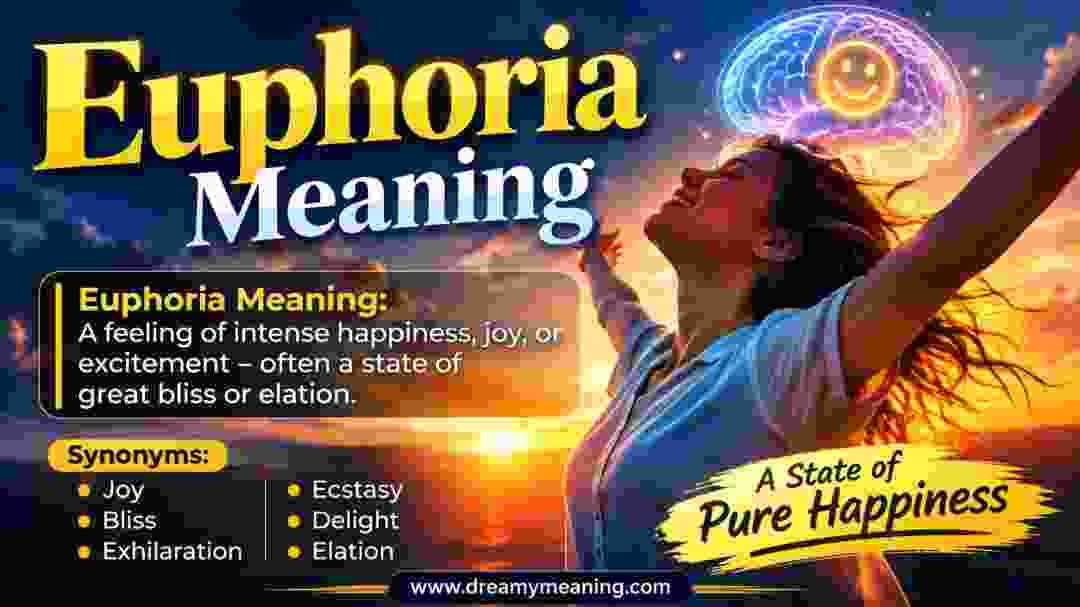
The straightforward euphoria meaning is an intense, often sudden feeling of extreme happiness, excitement, and physical vitality that goes far beyond ordinary contentment.
2. How does euphoria meaning differ from regular happiness?
While happiness is a stable, calm sense of well-being, the euphoria meaning involves a powerful surge of elation that temporarily elevates mood, energy, and perception—usually tied to a specific trigger.
3. Can you experience euphoria meaning without drugs?
Absolutely. Natural triggers like intense exercise, music, creative flow, and deep social bonding regularly produce a safe, healthy euphoria meaning rooted in the brain’s own chemistry.
4. Is the euphoria meaning portrayed in the TV show “Euphoria” accurate?
The show captures the desperation behind chemically induced highs but narrows the euphoria meaning to its most destructive form. Real-life euphoria includes many positive, drug-free versions.
5. What causes a sudden feeling of euphoria meaning while listening to music?
Frisson—musical chills—arises when the brain’s reward system releases dopamine in anticipation of a poignant passage, giving a momentary euphoria meaning that feels physical and emotional.
6. How long does the euphoria meaning of a runner’s high last?
Typically between 30 minutes and two hours post-exercise, depending on intensity and individual brain chemistry. The lingering sense of calm and clarity may outlast the initial high.
Take Your Understanding Deeper
Now you have a complete map of the euphoria meaning. This feeling isn’t a mystery locked behind substances or rare fortune—it’s a natural human capacity you can nurture. Pay attention this week to the small eruptions of bliss: the song that makes your heart race, the laughter that shakes your whole body, the quiet awe of a sunset. Write them down. Name the trigger. Experiment with the cultivation practices suggested here, and watch your emotional landscape widen.