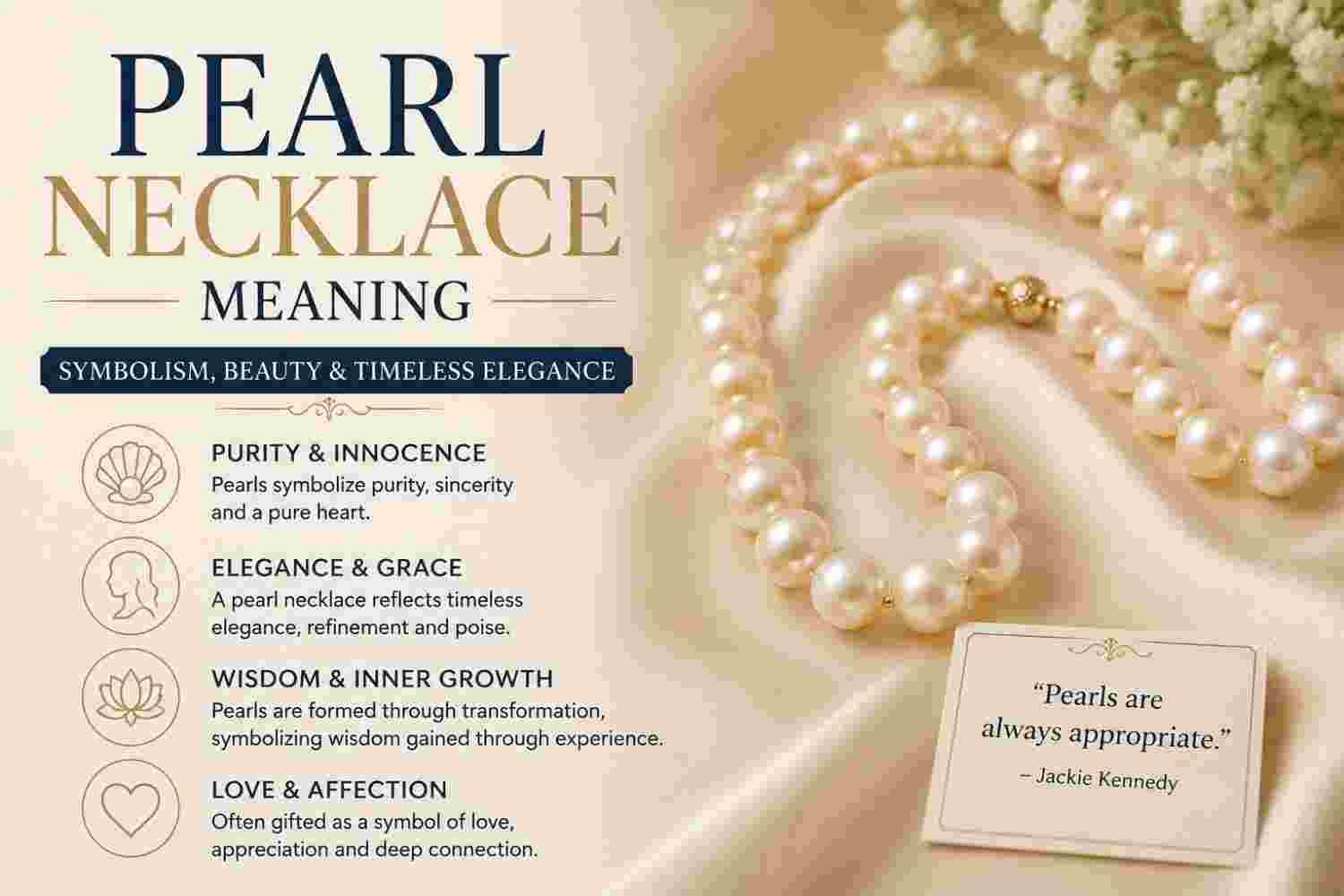
Pearl Necklace Meaning: What This Timeless Gem Really Symbolizes
A pearl necklace can sit quietly in a jewelry box for decades, yet the moment someone wears it, people notice something different. There’s a reason grandmothers pass them down and brides insist on wearing one.
Behind that soft shine is a symbol loaded with history, emotion, and meaning most people never learn. This guide breaks down exactly what a pearl necklace represents, where that meaning came from, and how to choose one that actually means something to you.
What Does A Pearl Necklace Symbolize?
At its core, a pearl necklace represents purity, wisdom, and integrity. Unlike gemstones cut and polished from rock, pearls form naturally inside a living creature, which is exactly why cultures have treated them as something almost sacred.
That organic origin gives pearls emotional weight other jewelry doesn’t carry. A diamond gets mined and shaped by human hands, but a pearl gets built slowly, layer by layer, inside an oyster reacting to an irritant.
Many people connect that process to real life. Something beautiful growing out of discomfort or difficulty resonates with anyone who has faced a hard season and came out stronger.
The Emotional Symbolism Behind Pearls
- Purity and innocence, historically linked to weddings and new beginnings
- Wisdom gained through experience, often associated with older or respected women
- Loyalty and commitment, which is why pearls remain popular anniversary gifts
- Inner strength, since the pearl forms as a natural response to irritation
- Femininity and grace, tied closely to elegance in fashion history
The History Of Pearl Necklace Meaning Across Cultures
Pearls didn’t earn their symbolism overnight. Different civilizations attached distinct meanings to them across thousands of years, and many of those beliefs still shape how we view pearls today.
Ancient Rome And Greece
Roman aristocrats considered pearls a direct symbol of wealth and social status. Julius Caesar reportedly passed laws limiting pearl-wearing to the ruling class alone, which tells you how powerful the symbol had become.
Greek mythology connected pearls to tears of joy, believed to form when a goddess cried happy tears into the sea. That romantic origin story still influences how pearls get used in modern wedding jewelry.
Ancient China
Chinese culture linked pearls to wisdom and dragon mythology, believing dragons carried pearls in their throats representing power and enlightenment. Pearls also appeared in traditional medicine, ground into powders believed to promote health and longevity.
Victorian England
Queen Victoria made pearls a mourning and remembrance symbol during her reign, often wearing them after Prince Albert’s death. That association gave pearls a layered meaning: both celebratory in weddings and comforting in grief.
Pearl Necklace Meaning In Modern Weddings
Brides have worn pearls for centuries, and that tradition hasn’t slowed down. The phrase “something old” in wedding traditions often gets fulfilled with a pearl necklace passed through generations.
Pearls represent a pure and lasting union, which explains why they remain a top choice for bridal jewelry even as trends shift. Unlike flashy diamonds, pearls carry a quieter kind of elegance that photographs beautifully without overpowering a wedding dress.
Why Brides Still Choose Pearls
- Symbolize purity and a fresh start into married life
- Complement almost any dress style without competing for attention
- Carry sentimental weight when inherited from a mother or grandmother
- Represent a calm, timeless elegance that never feels dated
- Pair naturally with both vintage and modern wedding themes
Color Meanings: Does Pearl Color Change The Symbolism?
Not all pearls carry identical meaning. Color plays a real role in how a pearl necklace gets interpreted, and understanding this helps when choosing a gift or personal piece.
| Pearl Color | Symbolic Meaning |
|---|---|
| White | Purity, innocence, new beginnings |
| Cream/Ivory | Warmth, comfort, classic elegance |
| Black (Tahitian) | Mystery, protection, confidence |
| Pink | Love, romance, emotional healing |
| Gold (South Sea) | Wealth, success, luxury |
| Lavender | Balance, femininity, subtle sophistication |
White remains the most requested color because of its association with weddings and purity. Black Tahitian pearls have grown significantly in popularity among younger buyers seeking a bolder, modern statement rather than a traditional look.
Pearl Necklace Meaning As A Gift
Gifting a pearl necklace sends a specific emotional message depending on the occasion. Understanding this helps you pick the right piece instead of guessing.
Birthday And Milestone Gifts
Pearls make an excellent gift for June birthdays since pearl is the official birthstone for that month. Giving one signals appreciation for someone’s grace, patience, or personal growth.
Anniversary Gifts
Traditionally, pearls represent the 30th wedding anniversary, symbolizing a marriage that has weathered time and grown more valuable, much like the pearl itself. Giving pearls at this milestone carries deep symbolic weight beyond just aesthetics.
Mother-Daughter Gifts
Many families treat pearl necklaces as a rite-of-passage gift, given when a daughter graduates, turns eighteen, or gets married. That tradition reinforces the necklace’s meaning around maturity, wisdom, and femininity passed between generations.
Types Of Pearls And What They’re Worth Knowing
Before buying, it helps to understand which type of pearl actually fits the meaning you’re going for. Not every pearl comes from the same process or origin.
Natural Pearls
These form entirely without human intervention and remain extremely rare today. Most natural pearls on the market now come from antique or estate jewelry rather than fresh harvesting.
Cultured Pearls
Farmers insert an irritant into an oyster to trigger pearl formation under controlled conditions. This method makes up the vast majority of pearls sold today and keeps prices far more accessible.
Freshwater Vs. Saltwater Pearls
Freshwater pearls grow in mussels found in lakes and rivers, typically costing less due to higher production volume. Saltwater pearls, including Akoya, Tahitian, and South Sea varieties, tend to carry higher value due to slower growth cycles and stricter farming conditions.
Quick Facts Summary Table
| Category | Detail |
|---|---|
| Primary Symbolism | Purity, wisdom, integrity |
| Birthstone Month | June |
| Traditional Anniversary | 30th wedding anniversary |
| Most Common Color | White/Cream |
| Rarest Type | Natural (non-cultured) pearls |
| Popular Modern Choice | Tahitian black pearls |
| Cultural Origins | Ancient Rome, Greece, China, Victorian England |
How To Choose A Pearl Necklace That Matches Your Intended Meaning
Picking the right pearl necklace goes beyond matching an outfit. The choice should reflect what you’re trying to communicate, whether that’s love, respect, or celebration.
- Match the occasion to the traditional meaning behind pearls, like weddings or anniversaries
- Consider the recipient’s personality, since bold black pearls suit different people than classic white strands
- Check pearl quality by looking at luster, surface smoothness, and consistent shape
- Think about longevity, since pearls often become heirlooms passed down for generations
- Set a realistic budget, as freshwater pearls offer meaning and beauty without the high saltwater price tag
Frequently Asked Questions
What does wearing a pearl necklace mean spiritually?
Wearing a pearl necklace is often associated with calmness, emotional balance, and inner wisdom, rooted in centuries-old beliefs that pearls carry protective and purifying energy.
Why are pearls considered a symbol of purity?
Pearls symbolize purity because they form naturally without artificial cutting or shaping, staying in their original organic state, which connects them to ideas of innocence and untouched beauty.
What is the biblical meaning of pearls?
In biblical references, pearls often represent something extremely valuable and rare, most famously in the parable of “the pearl of great price,” symbolizing something worth sacrificing everything to obtain.
Is a pearl necklace a good engagement or wedding gift?
Yes, pearl necklaces make a meaningful engagement or wedding gift because they symbolize purity, lasting love, and a fresh beginning, making them a popular alternative to traditional diamond jewelry.
What does a black pearl necklace symbolize?
A black pearl necklace symbolizes mystery, confidence, and protection, often chosen by those wanting a bolder, more modern take on traditional pearl elegance.
Why do pearls represent wisdom?
Pearls represent wisdom because their formation takes years of patience inside an oyster, mirroring how real wisdom develops slowly through lived experience rather than overnight change.
Can men wear pearl necklaces too?
Yes, pearl necklaces have become increasingly popular among men in recent years, symbolizing confidence and individuality while breaking away from traditional gender-specific jewelry norms.
Final Verdict
A pearl necklace carries far more weight than its price tag suggests. Every strand tells a story about patience, purity, and quiet strength built up over time, not unlike the person wearing it.
Next time you put one on or hand one down to someone you love, remember you’re passing along centuries of meaning, not just a piece of jewelry. That’s the real reason pearls never go out of style.