Vocal Stim Meaning: What Those Sounds Are Really Telling You
Your child hums the same three notes for ten minutes straight, or your partner repeats a movie line under their breath every time they’re stressed. You’ve probably wondered if something is wrong.
Here’s the truth nobody explained clearly enough: vocal stimming isn’t a problem to fix. It’s a window into how a brain regulates itself, and once you understand it, the sounds stop feeling strange and start making sense.
What Does Vocal Stim Actually Mean?
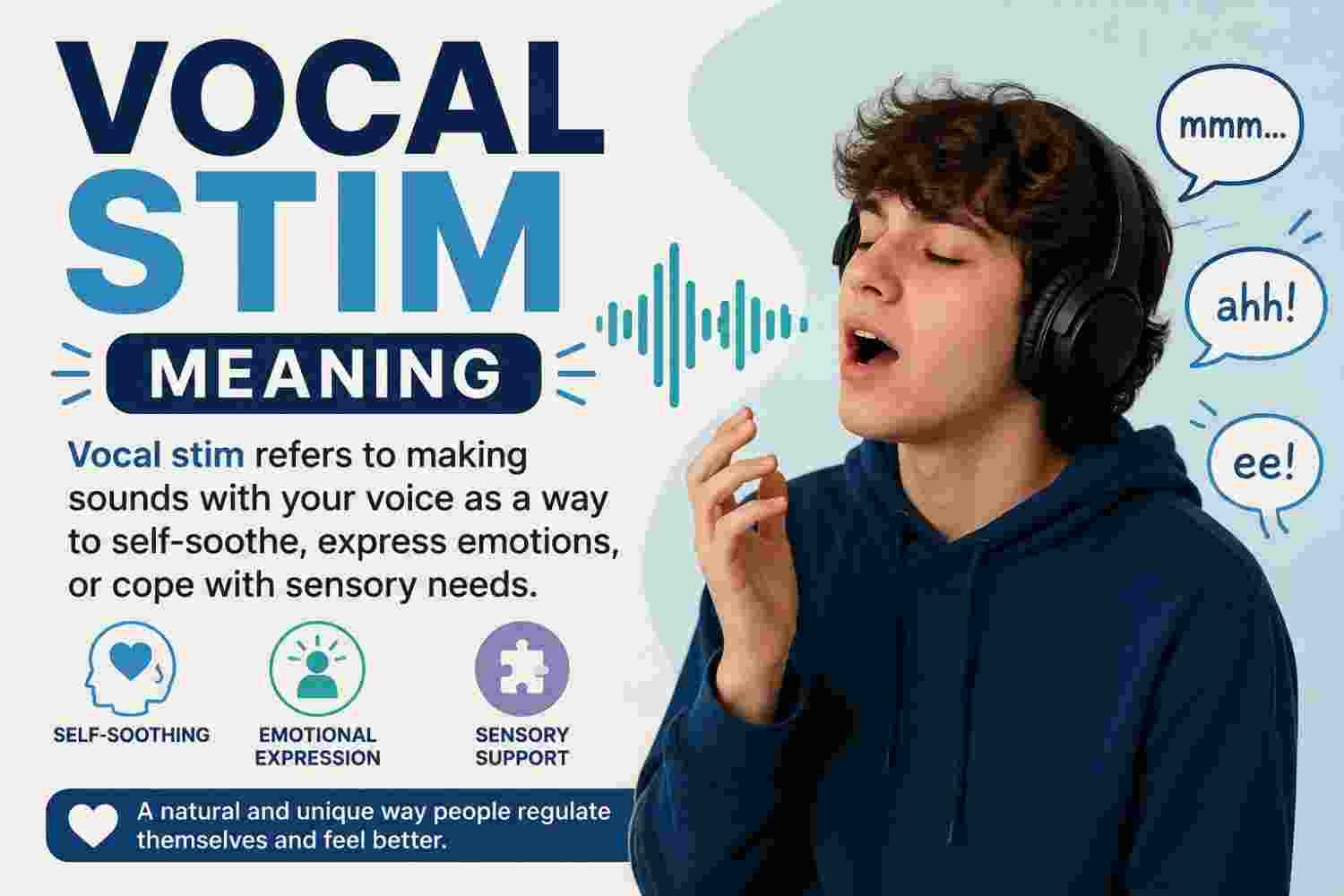
Vocal stimming refers to repetitive sounds, words, or noises a person makes to self-regulate their nervous system. The term “stim” is short for self-stimulatory behavior, and it isn’t limited to movement.
Where hand-flapping or rocking are physical stims, vocal stims work through sound instead. They can be loud or barely audible, and they often happen without the person even noticing they’re doing it.
This behavior shows up most commonly among autistic individuals, people with ADHD, and those with sensory processing differences. But research increasingly shows that neurotypical people stim too, just less frequently and less visibly.
Common Examples of Vocal Stimming
Vocal stims take many shapes depending on the person and their emotional state. Recognizing the pattern helps separate stimming from something like a speech disorder or tic.
- Humming the same tune repeatedly
- Repeating words or phrases (echolalia)
- Clicking, clearing the throat, or making click-like sounds
- Grunting, squealing, or high-pitched vocal bursts
- Whispering scripts from movies or shows
- Making animal-like sounds for comfort
Why Do People Vocally Stim? The Science Behind It
Stimming isn’t random noise-making. Neuroscience suggests it helps regulate an overstimulated or understimulated nervous system, acting almost like a pressure valve.
For someone with sensory sensitivities, a loud environment can feel physically overwhelming. Vocal stimming gives the brain a predictable, self-generated sound to focus on, which drowns out unpredictable external noise.
The Three Main Triggers
Understanding what sets off vocal stimming makes it far easier to respond with patience instead of confusion.
- Overstimulation – Too much noise, light, or social interaction pushes the brain to seek relief through sound.
- Understimulation – Boredom or a lack of sensory input can trigger stimming to create needed stimulation.
- Emotional intensity – Excitement, anxiety, or joy often spill out through repeated vocal patterns.
A 2023 review published in the Journal of Autism and Developmental Disorders noted that stimming behaviors, including vocal ones, correlate strongly with emotional regulation attempts rather than random dysfunction. This matches what many autistic self-advocates have said for years.
Vocal Stimming vs. Tics: How to Tell the Difference
Parents and teachers often mix these two up, which leads to unnecessary worry or the wrong kind of support. The distinction actually matters quite a bit.
| Feature | Vocal Stimming | Vocal Tics |
|---|---|---|
| Control | Usually voluntary or semi-voluntary | Mostly involuntary |
| Purpose | Self-regulation, comfort | No conscious purpose |
| Pattern | Repeats familiar sounds/words | Sudden, often random sounds |
| Suppressibility | Can often be paused | Suppressing causes discomfort |
| Associated condition | Autism, ADHD, sensory processing | Tourette syndrome, tic disorders |
Looking at this table, the biggest giveaway is intention. Stimming tends to feel soothing and chosen, even subconsciously, while tics feel like an itch that has to be scratched regardless of the person’s wishes.
Is Vocal Stimming Something to Worry About?
Short answer: rarely. Vocal stimming becomes a genuine concern only in specific situations, not simply because it exists.
When It’s Perfectly Normal
Most vocal stimming falls into this category, and treating it as harmless is usually the right call.
- It doesn’t hurt the person or anyone nearby
- It happens during stress, focus, or excitement
- The person can pause it briefly if asked
- It doesn’t disrupt sleep, eating, or basic daily function
When to Consult a Professional
A small number of cases warrant a closer look from a speech therapist, pediatrician, or occupational therapist.
- Sudden onset of new vocal sounds after age 5
- Sounds cause physical pain (throat strain, headaches)
- Stimming completely replaces functional communication
- It’s paired with a noticeable regression in other skills
Getting an evaluation doesn’t mean something is broken. It simply confirms whether extra support would help the person thrive.
How to Support Someone Who Vocally Stims
The instinct to say “stop that” is common, but it often backfires. Suppressing stimming can increase anxiety since the coping tool gets taken away without a replacement.
Practical, Respectful Strategies
These approaches come from occupational therapists and autistic advocates who’ve spent years refining what actually helps.
- Create low-demand spaces where stimming is welcomed without judgment
- Offer alternatives, not bans, like a fidget toy alongside the sound if the setting truly requires quiet
- Ask, don’t assume what the sound means to that specific person
- Educate others nearby so the behavior isn’t mistaken for rudeness or defiance
- Watch for stress spikes since increased stimming often signals rising anxiety, not misbehavior
A teacher who understands vocal stimming will let a student hum quietly during independent work instead of demanding total silence. That single adjustment can prevent a meltdown later in the day.
Vocal Stimming in Adults: The Overlooked Reality
Most articles online focus on children, but adults stim just as much, often after learning to mask it in public for years. Masking takes a real toll on mental energy.
Many autistic and ADHD adults describe releasing pent-up stims the moment they get home, sometimes called an “autistic burnout unwind.” Humming in the car alone, repeating song lyrics on a walk, or clicking their tongue while reading are all common examples.
Recognizing this in yourself isn’t a diagnosis, but it can be the first thread that leads someone toward a helpful evaluation and, eventually, real self-understanding.
Frequently Asked Questions
What is the simplest definition of vocal stimming?
Vocal stimming is making repetitive sounds, words, or noises to help the nervous system feel calmer, more focused, or more comfortable.
Is vocal stimming only linked to autism?
No. While it’s common in autism, people with ADHD, sensory processing differences, and even neurotypical individuals under stress can vocally stim too.
Can vocal stimming be a sign of anxiety instead of autism?
Yes. Increased vocal stimming often shows up during anxious periods regardless of whether someone is autistic, since it functions as a self-soothing mechanism.
Should I stop my child from vocal stimming in public?
Redirecting toward a quieter alternative is better than outright stopping it, since removing the coping tool without a replacement can increase distress.
How is vocal stimming different from talking to yourself?
Vocal stimming repeats familiar sounds or phrases for comfort, while self-talk typically involves working through thoughts or problems verbally.
Does vocal stimming ever go away with age?
It often becomes quieter or more controlled through masking, but the underlying need for regulation usually stays present throughout life.
Can therapy help reduce disruptive vocal stimming?
Speech and occupational therapists can help find replacement strategies for cases where stimming interferes with daily function, without erasing the coping need entirely.
Final Thoughts
Vocal stimming isn’t noise to be silenced. It’s a genuine communication signal about what someone’s nervous system needs in that exact moment.
The next time you hear humming, clicking, or a repeated phrase, try curiosity instead of correction. That shift alone can turn an awkward moment into a small act of real understanding.