Purple Ribbon Meaning: Full List of Causes & Awareness
You spot a purple ribbon pinned to a stranger’s lapel or tattooed on a friend’s wrist, and you freeze. Not knowing what it stands for can feel awkward, even lonely. You might miss a quiet chance to say, “I see you, and I care.” This guide sorts every purple ribbon meaning into one clear map. You will never guess again—you’ll know exactly when to offer a kind word, share a resource, or wear your own ribbon with pride.
What Is the Purple Ribbon Meaning?
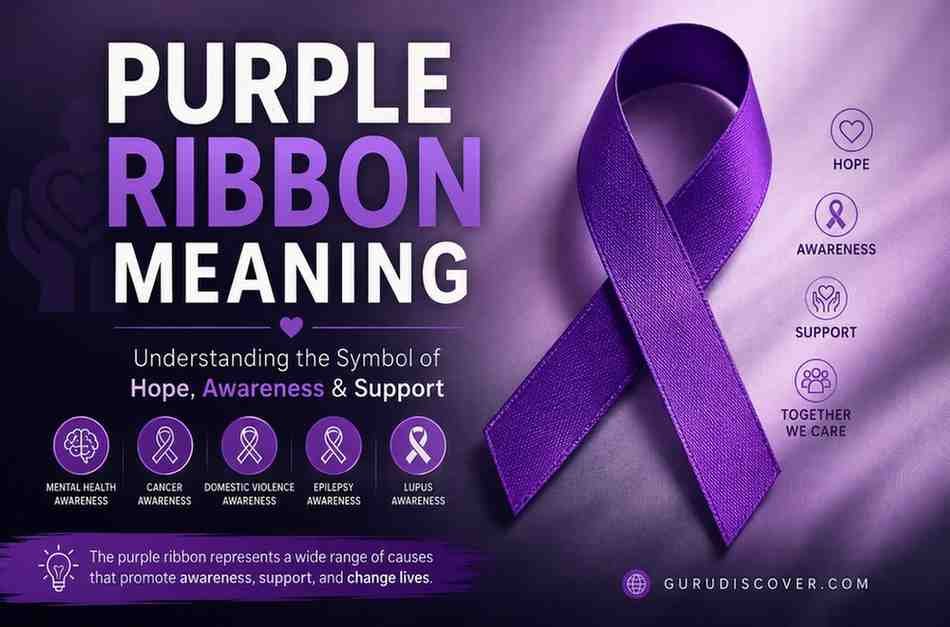
The purple ribbon carries more than two dozen causes, but they share a common thread. It stands for courage, survival, and remembrance across medical conditions, social crises, and personal loss. Unlike single-focus colors, purple weaves together cancer awareness, domestic violence prevention, Alzheimer’s support, epilepsy advocacy, and animal cruelty prevention, among others. People wear it as a silent signal: “I stand with you,” “I remember,” or “I fight for change.”
This layered symbolism makes the purple ribbon one of the most versatile awareness symbols worldwide. A single loop of purple fabric speaks a language hospitals, shelters, and vigils all understand. When you learn the purple ribbon meaning for each cause, you hold a powerful key to compassion. You can recognize a stranger’s battle, honor a loved one’s fight, or amplify a movement that needs your voice.
The History of the Purple Awareness Ribbon
Awareness ribbons trace their roots to the yellow ribbons tied for soldiers and hostages in the 1970s. By the early 1990s, the red AIDS ribbon turned a simple strip of silk into a global icon. Purple entered the scene quietly through epilepsy advocates and quickly expanded. The Alzheimer’s Association adopted purple in the 1990s to symbolize loss, dignity, and hope. Domestic violence campaigns followed, painting the color of bruised skin into a sign of strength and survival.
Today, purple ribbons appear in walks, rallies, and candlelight vigils on every continent. They mark months of action, days of remembrance, and lifetimes of advocacy. Knowing this timeline connects you to four decades of ordinary people turning pain into purpose.
Table: Purple Ribbon Causes, Shades, and Observances
| Cause | Specific Purple Ribbon Meaning | Shade of Purple | Key Observance |
|---|---|---|---|
| Alzheimer’s Disease | Memory loss awareness, caregiver support, brain health | Deep purple | November (Alzheimer’s Awareness Month) |
| Domestic Violence | Survivor strength, victim remembrance, prevention | Purple or lavender | October (Domestic Violence Awareness Month) |
| Pancreatic Cancer | Hope for a cure, patient support, early detection | Purple | November (Pancreatic Cancer Awareness Month) |
| Epilepsy | Seizure recognition, ending stigma, research funding | Lavender | November (Epilepsy Awareness Month); Purple Day March 26 |
| Animal Abuse & Cruelty | Speaking for voiceless animals, rescue advocacy | Purple | April (Prevention of Cruelty to Animals Month) |
| Fibromyalgia | Chronic pain validation, invisible illness support | Purple with butterfly | May 12 (Fibromyalgia Awareness Day) |
| Lupus | Autoimmune disease education, patient community | Purple | May (Lupus Awareness Month) |
| Sarcoidosis | Rare disease recognition, lung and organ inflammation | Purple | April (Sarcoidosis Awareness Month) |
| Cystic Fibrosis | Genetic disorder awareness, lung health | Purple | May (Cystic Fibrosis Awareness Month) |
| Religious & Lent | Penitence, royalty, sacrifice | Deep violet | Lent season |
| Substance Use Recovery | Overdose prevention, recovery celebration | Purple | August 31 (International Overdose Awareness Day) |
| Homelessness Awareness | Shelter access, dignity for unhoused people | Purple | November (Hunger & Homelessness Awareness Week) |
| Military & Veterans | Honoring service, PTSD support, wounded warriors | Purple (Purple Heart) | National Purple Heart Day August 7 |
| Thyroid Cancer | Support for survivors, screening awareness | Teal/purple combination | September (Thyroid Cancer Awareness Month) |
| Testicular Cancer | Men’s health, early detection | Purple (often paired with orchid) | April (Testicular Cancer Awareness Month) |
Purple Ribbon Meaning in Cancer Awareness
Ask, “What cancer does a purple ribbon represent?” and you get a list, not one answer. Pancreatic cancer claims the boldest purple. The Pancreatic Cancer Action Network chose purple because it reflects passion, hope, and the fierce urgency for a cure. Survivor rates remain low, so every purple shirt at a fundraising walk screams “Demand Better.”
Thyroid cancer shares purple, often with a teal stripe, while testicular cancer uses purple alongside an orchid hue. Some rare cancers, such as leiomyosarcoma, also adopt purple. When you see a purple ribbon at a cancer event, assume the wearer carries a deeply personal story. Ask gently, listen fully, and let the purple ribbon meaning for cancer remind you that behind every loop stands a family fighting for more birthdays.
Source: Pancreatic Cancer Action Network (pancan.org) confirms purple as the official awareness color for pancreatic cancer.
Domestic Violence and the Purple Ribbon
The most recognized purple ribbon meaning outside of medicine ties directly to domestic violence. Shelters and hotlines use purple because it memorializes women who died at the hands of intimate partners and celebrates survivors who escaped. During October, communities drape purple banners, hold vigils, and pin ribbons to lapels. The National Domestic Violence Hotline reports that one in four women and one in nine men experience severe intimate partner violence. That ribbon signals, “You are not invisible.”
When you wear purple in October, pair it with action. Donate to a local shelter, share hotline numbers, or simply check in on a friend who seems withdrawn. A small loop of purple can open a door to safety. The color that once symbolized bruised skin now stands for an army of advocates who refuse to look away.
Source: National Domestic Violence Hotline (thehotline.org) references purple ribbons as a universal symbol for domestic violence awareness.
Alzheimer’s Disease and Brain Health
Purple holds one of the longest-running associations with Alzheimer’s disease. The Alzheimer’s Association adopted the color to represent the profound loss of memory and identity, yet also the enduring dignity of every affected family. Each November, buildings light up purple, walks flood city streets, and caregivers pin ribbons beside faded photographs. The purple ribbon meaning for Alzheimer’s is dual: grieve what fades, fight for what remains.
Researchers estimate over 6 million Americans live with Alzheimer’s. That number doubles as caregivers—spouses, children, friends—who wear purple to honor someone who may no longer recall their name but still feels their love. When you see that ribbon, know it holds a story of long goodbyes and stubborn devotion.
Source: Alzheimer’s Association (alz.org) designates purple as the signature color for the fight against Alzheimer’s disease.
Epilepsy Advocacy and Lavender Ribbons
Lavender, a soft shade of purple, represents epilepsy. The connection grew from the flower lavender, often associated with solitude and calm, mirroring the isolation seizures can cause. Purple Day, celebrated on March 26, invites people worldwide to wear lavender and educate their communities. The Epilepsy Foundation reports one in 26 people will develop epilepsy in their lifetime. A lavender ribbon says, “I see your invisible struggle.”
Parents of children with epilepsy frequently choose a lavender ribbon tattoo. It signals to teachers, coaches, and first responders that a medical condition exists without the child needing to explain. This quiet purple ribbon meaning transforms a decorative color into a lifesaving alert.
Animal Cruelty Prevention and the Purple Ribbon
Animal advocates adopted purple to speak for creatures who cannot speak for themselves. The American Society for the Prevention of Cruelty to Animals (ASPCA) endorses purple during April, Prevention of Cruelty to Animals Month. Shelters hand out purple ribbons to volunteers, foster families, and donors. That ribbon means, “I protect the voiceless.”
Seeing a purple ribbon on a dog collar, a rescue van, or a volunteer’s shirt signals a commitment to ethical treatment. When you understand this purple ribbon meaning, you can thank that person for the late-night bottle feedings, the rehabilitation of abused horses, or the quiet mercy of end-of-life care for a forgotten senior dog. It is a color of radical kindness.
How to Use the Purple Ribbon for Maximum Awareness
A ribbon works best when it sparks conversation. Wear a pin on your jacket and pair it with a small card explaining the cause you support. Add the ribbon to your email signature during awareness months. Social media posts with a purple ribbon graphic and a personal story generate three times more shares than a generic fact sheet.
Organize a “Wear Purple Day” at your workplace and donate lunch money to a connected charity. When someone asks, “Why purple?” you can hand them a printed list of purple ribbon causes and invite them to choose one. Action multiplies meaning. A ribbon pinned alone in a drawer changes nothing. A ribbon worn with a purpose moves entire communities.
What Do Different Shades of Purple Mean?
Purple shifts from soft lavender to deep violet, and each shade whispers a slightly different purple ribbon meaning. Lavender often points to epilepsy, fibromyalgia, or general cancer survivorship. Bright purple leans toward pancreatic cancer and domestic violence. Deep violet carries spiritual and religious tones, appearing during Lent or on military honors like the Purple Heart.
Understanding shade nuance helps you avoid misidentification. If you want to support a specific cause, check the official color hex code on the organization’s website. An epilepsy ribbon should feel dusty and pale, while a domestic violence ribbon stands bold and unapologetic. This small attention to detail deepens the respect your gesture carries.
Religious and Cultural Purple Ribbon Meaning
Long before awareness ribbons, purple cloth meant royalty, repentance, and reflection. In Christianity, churches drape purple during Advent and Lent as a sign of preparation and sorrow. A purple ribbon worn during Holy Week connects the wearer to centuries of spiritual practice. In some cultures, purple signifies mourning and memory, creating a natural bridge to modern remembrance ribbons.
If you attend a vigil and see purple ribbons tied to candles, the message straddles faith and human solidarity. The color transcends medical charts and social campaigns. It touches something older: the universal need to mark loss, honor sacrifice, and hold hope in a fragile world.
Purple Ribbon Symbolism in Military Honors
The Purple Heart medal represents one of the most solemn purple ribbon meanings. First created by George Washington, this military decoration honors soldiers wounded or killed in enemy action. A purple ribbon with a gold border hangs the heart-shaped medal. Families receive it with tears, and veterans wear it with silent dignity.
Unlike awareness ribbons, this one is earned through blood and sacrifice. When you see it on a uniform or a display case, do not confuse it with a cause ribbon. Respect its singular gravity. The same color that fights for a cancer cure also honors the ultimate price paid for freedom.
How to Talk to Children About the Purple Ribbon
Children notice symbols quickly. Use the purple ribbon as a teaching moment. Explain that some people wear it to remember someone they love, to help doctors find medicine, or to ask people to be kind to animals. Keep it simple: “This purple ribbon means someone is brave.”
Let a child choose a ribbon to wear for a family member or a friend. When they own the meaning, empathy takes root. A first-grader who pins a purple ribbon for a grandparent with Alzheimer’s learns loyalty early. You plant seeds of advocacy with a 10-cent piece of ribbon.
Why the Purple Ribbon Unites So Many Causes
A single color carrying over 15 meanings can confuse people, but it also creates solidarity. Two strangers wearing purple at a grocery store might be there for completely different reasons—one fighting lupus, the other grieving a domestic violence victim. Yet they share the same visible promise: “I will not suffer silently, and neither should you.”
This unity explains why the purple ribbon meaning expands rather than dilutes. Each cause gains allies from unrelated movements. A pancreatic cancer activist learns about epilepsy. A domestic violence counselor donates to an animal shelter. Purple becomes a net, not a niche. Wear it and you join thousands of quiet revolutionaries linking arms across battles you may never fully see.
Frequently Asked Questions (FAQs)
What does a purple ribbon symbolize?
A purple ribbon symbolizes awareness for many causes, including domestic violence, Alzheimer’s disease, pancreatic cancer, epilepsy, and animal cruelty. The exact meaning depends on the shade, context, and companion materials.
What cancer ribbon is purple?
Pancreatic cancer uses a solid purple ribbon. Thyroid cancer uses purple with teal, and testicular cancer pairs purple with orchid. Some rare cancers also adopt purple, so look for event signage or ask the wearer directly.
What does the purple ribbon mean for domestic violence?
In domestic violence advocacy, the purple ribbon stands for survivor strength, victim remembrance, and prevention. October’s Domestic Violence Awareness Month features purple ribbons at vigils, fundraisers, and educational events.
Is epilepsy represented by a purple ribbon?
Yes, epilepsy and seizure disorders use a lavender or light purple ribbon. Purple Day on March 26 encourages global participation to reduce stigma and promote seizure first-aid training.
What does a dark purple ribbon mean versus a light purple ribbon?
Dark purple often represents Alzheimer’s disease, pancreatic cancer, religious observance, or military honors like the Purple Heart. Light purple or lavender typically signals epilepsy, fibromyalgia, and general cancer survivorship.
How did the purple ribbon become a universal awareness symbol?
The purple ribbon gained traction in the 1990s through Alzheimer’s and domestic violence campaigns. It expanded as more organizations adopted purple to convey courage, loss, and hope, mirroring the success of the red AIDS ribbon.