Antifa Meaning: The Real Definition Behind the Headlines
You’ve heard “antifa” shouted on the news, argued about on social media, and debated at family dinners, yet nobody around you can actually define it clearly. That confusion isn’t your fault, because this term gets used very differently depending on who’s speaking.
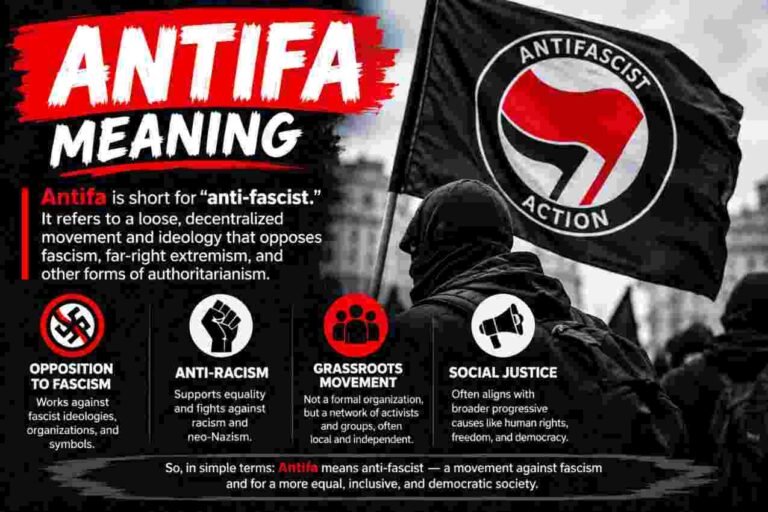
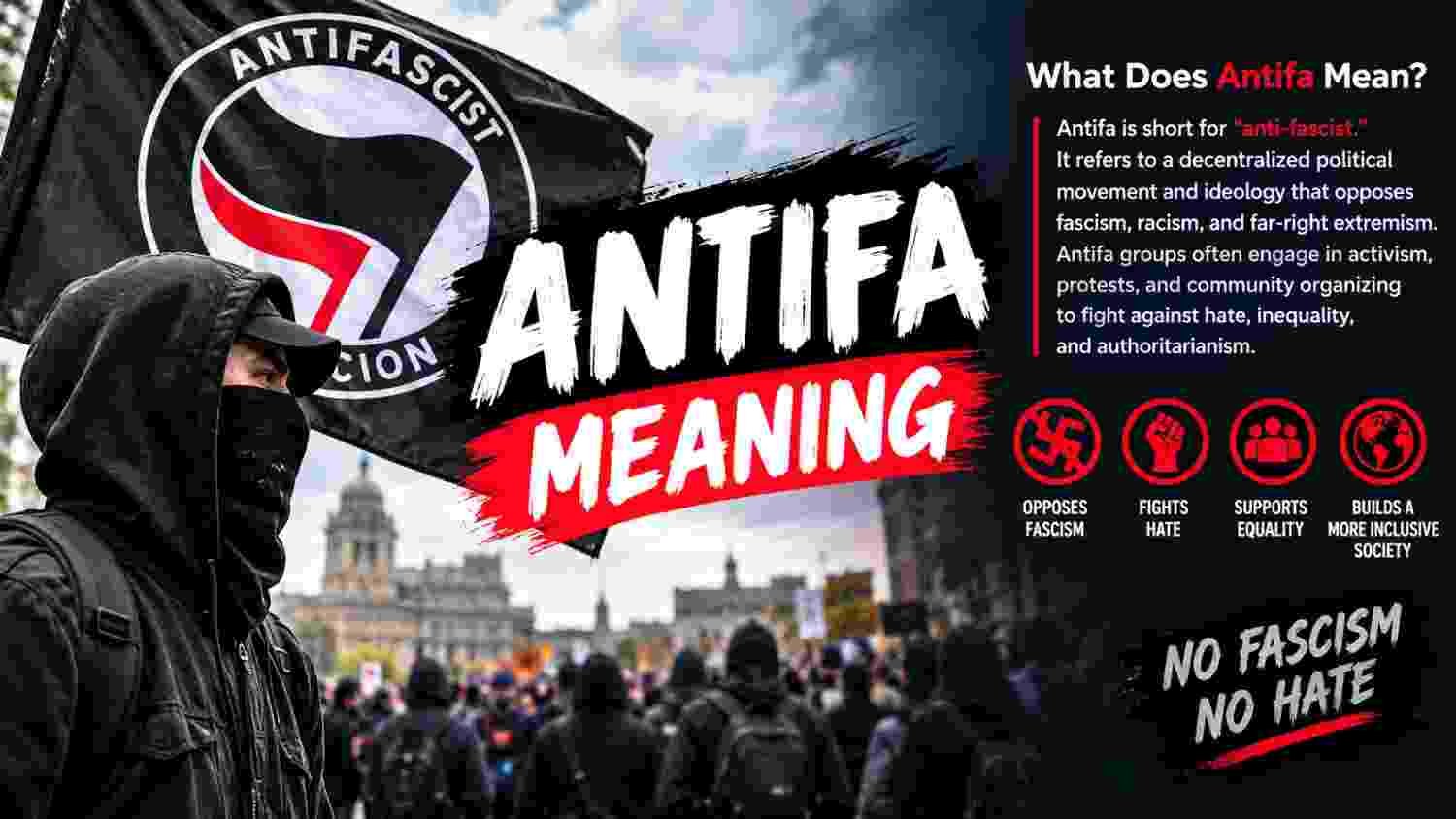
Here’s the plain answer before anything else: antifa is short for “anti-fascist,” a broad label for individuals and loosely connected groups who oppose fascism, often through direct action, protest, or confrontation.
By the end of this guide, you’ll understand where the word came from, how it’s used today, and why it sparks such heated disagreement across the political spectrum.
What Does Antifa Actually Mean?
The word antifa is simply a shortened form of “anti-fascist.” It’s not the name of one single organization with a leader, a headquarters, or a membership card.
Instead, antifa functions more like a political label or umbrella term. People and small groups who identify this way generally share one core belief: fascism and far-right extremism must be actively opposed, not just criticized from a distance.
Breaking Down the Term Itself
Understanding the word gets easier once you split it into its historical roots.
- Anti — Meaning against or opposed to
- Fa — Shorthand for fascist or fascism
- Combined term — First popularized in early 20th-century Europe
This linguistic structure matters because it shows the term predates modern American politics by roughly a century.
Where Did the Antifa Movement Come From?
Most people assume antifa is a recent invention tied to modern U.S. politics, but the history actually stretches back much further and across different continents.
The European Origins
The earliest anti-fascist groups formed in Germany and Italy during the 1920s and 1930s, directly opposing Mussolini and later Hitler’s rise to power. These groups organized street-level resistance against fascist parties before World War II fully erupted.
Antifaschistische Aktion, a German organization founded in 1932, is widely cited as the direct origin of the modern symbol and name still used today. That black-and-red double-flag logo you sometimes see online traces straight back to this original group.
How the Term Reached the United States
The modern American usage of “antifa” gained mainstream attention much later, particularly around 2016 and 2017. Media coverage of protests, including the widely reported Charlottesville rally, pushed the term into everyday news cycles.
Since then, antifa has become shorthand in U.S. discourse for loosely organized anti-fascist activists who show up at protests, sometimes clashing with far-right or white nationalist groups.
How Antifa Actually Operates Today
Unlike a political party or registered nonprofit, antifa has no central command structure, no official spokesperson, and no formal membership list. This decentralized nature is exactly why definitions vary so widely.
Common Characteristics Associated With the Movement
Based on years of journalistic coverage and academic research, a few patterns tend to repeat across groups identifying with this label.
- Local, independent cells rather than a national hierarchy
- Focus on direct confrontation with groups seen as fascist or white supremacist
- Use of tactics ranging from peaceful counter-protest to more aggressive physical confrontation
- Strong presence in online communication and rapid mobilization networks
- No unified leadership, funding source, or official spokesperson
The Range of Tactics Involved
It’s worth being clear that “antifa” covers a spectrum of behavior, not one single action type. Some self-identified anti-fascist activists limit themselves to organizing counter-protests, distributing literature, or documenting far-right activity online.
Others have engaged in property damage or physical altercations during demonstrations, which is the exact behavior that fuels the most intense political debate around the term.
Why Antifa Is So Politically Controversial
This is where the topic gets genuinely complicated, and any honest explainer has to present both sides fairly rather than picking a winner.
The Perspective That Supports Anti-Fascist Activism
Supporters argue that organized resistance to fascism has historical legitimacy, pointing directly back to World War II-era movements that physically fought Nazi and fascist expansion. They view modern anti-fascist activism as a continuation of that same principle, aimed at preventing hate groups from gaining public ground.
From this viewpoint, confronting extremist rallies directly is seen as necessary, especially when other institutions are perceived as too slow or unwilling to act.
The Perspective That Criticizes Antifa’s Tactics
Critics, including many mainstream commentators and some government officials, argue that certain antifa-associated actions cross the line from protest into political violence. They point to specific incidents involving property destruction, physical assaults, or clashes with law enforcement as evidence the movement causes more harm than good.
Some political figures in the U.S. have called for antifa-linked activity to be formally classified as domestic extremism, though legal experts widely note that doing so is complicated since antifa isn’t a single, formally structured organization.
A Snapshot of the Debate
| Viewpoint | Core Argument |
|---|---|
| Supporters | Direct resistance to fascism is historically justified and necessary |
| Critics | Certain tactics constitute unlawful political violence |
| Legal Experts | Difficult to designate legally due to lack of formal structure |
| Media Coverage | Varies heavily depending on outlet and political leaning |
Human analysis: This table shows why the antifa meaning debate rarely reaches consensus. The disagreement usually isn’t about the dictionary definition of the word itself, but about which specific actions and incidents should represent the entire movement in public perception.
Antifa vs. Other Political Movements: Clearing the Confusion
People frequently mix antifa up with completely unrelated political groups, which only deepens public misunderstanding.
Common Misconceptions Worth Correcting
- Antifa is not a registered political party in any country
- It is not the same as general left-wing political affiliation or the Democratic Party
- Not everyone who opposes fascism identifies with or participates in antifa-associated tactics
- There is no single antifa “leader” despite frequent claims otherwise
Separating the loose ideological label from formal political institutions helps cut through a lot of the noise found in social media arguments.
Frequently Asked Questions
What does antifa actually stand for?
Antifa is short for “anti-fascist,” referring to individuals and decentralized groups opposed to fascism and far-right extremism, with roots tracing back to 1930s European resistance movements.
Is antifa an official organization?
No, antifa is not one formal organization. It functions as a political label describing loosely connected, independently operating local groups and individuals rather than a centrally structured group with official leadership.
When did antifa become popular in American discourse?
The term gained significant mainstream attention in the U.S. around 2016 and 2017, particularly following widely covered protests and clashes involving far-right demonstrations.
Is antifa considered a terrorist organization?
This remains legally and politically disputed. Some political figures have pushed for that classification, but legal experts note it’s difficult to apply since antifa lacks a formal organizational structure, membership, or leadership to designate.
What’s the difference between antifa and general anti-fascism?
Anti-fascism broadly refers to opposing fascist ideology in any form, including peaceful political opposition. Antifa specifically refers to the more direct-action oriented movement associated with confrontational tactics at protests.
Where did the antifa symbol come from?
The recognizable black-and-red double-flag logo originated from Antifaschistische Aktion, a German anti-fascist organization founded in 1932, and has since been adopted by modern movements worldwide.
Does antifa have official leaders or spokespeople?
No, this decentralized structure is actually one of its defining features. There’s no official leader, national headquarters, or single spokesperson representing all groups that use the antifa label.
Final Verdict on Antifa Meaning
The word antifa carries far more historical weight and nuance than a single news clip or viral post ever captures. At its core, it simply means opposition to fascism, but how that opposition gets expressed varies enormously from peaceful counter-protest to more aggressive confrontation.
Before forming a strong opinion either way, it pays to look past the loudest headlines and understand both the historical roots and the genuine, ongoing debate around modern tactics. That’s the only way to actually understand this term instead of just reacting to it.