What Is Orgo Meaning? The Real Student Guide
Most students hear the word “orgo” and immediately feel a knot in their stomach. It sounds like a secret code, a weed-out class, or a stress bomb waiting to explode. You want to know what orgo meaning really is and how to survive it. This guide gives you the real translation and seven battle-tested moves to pass without losing your mind.
Orgo is not just a class. It is a shared experience, a pre-med filter, and a word that carries weight in group chats, advising offices, and late-night library sessions. Once you understand what the term actually means and how to approach the course, the fear becomes manageable.
You do not need to be a chemistry genius. You need a smarter system, not more suffering. The tips below come from how top students actually break down organic chemistry, not from generic study advice that falls apart on exam day.
What Does Orgo Mean in College? The Real Student Translation
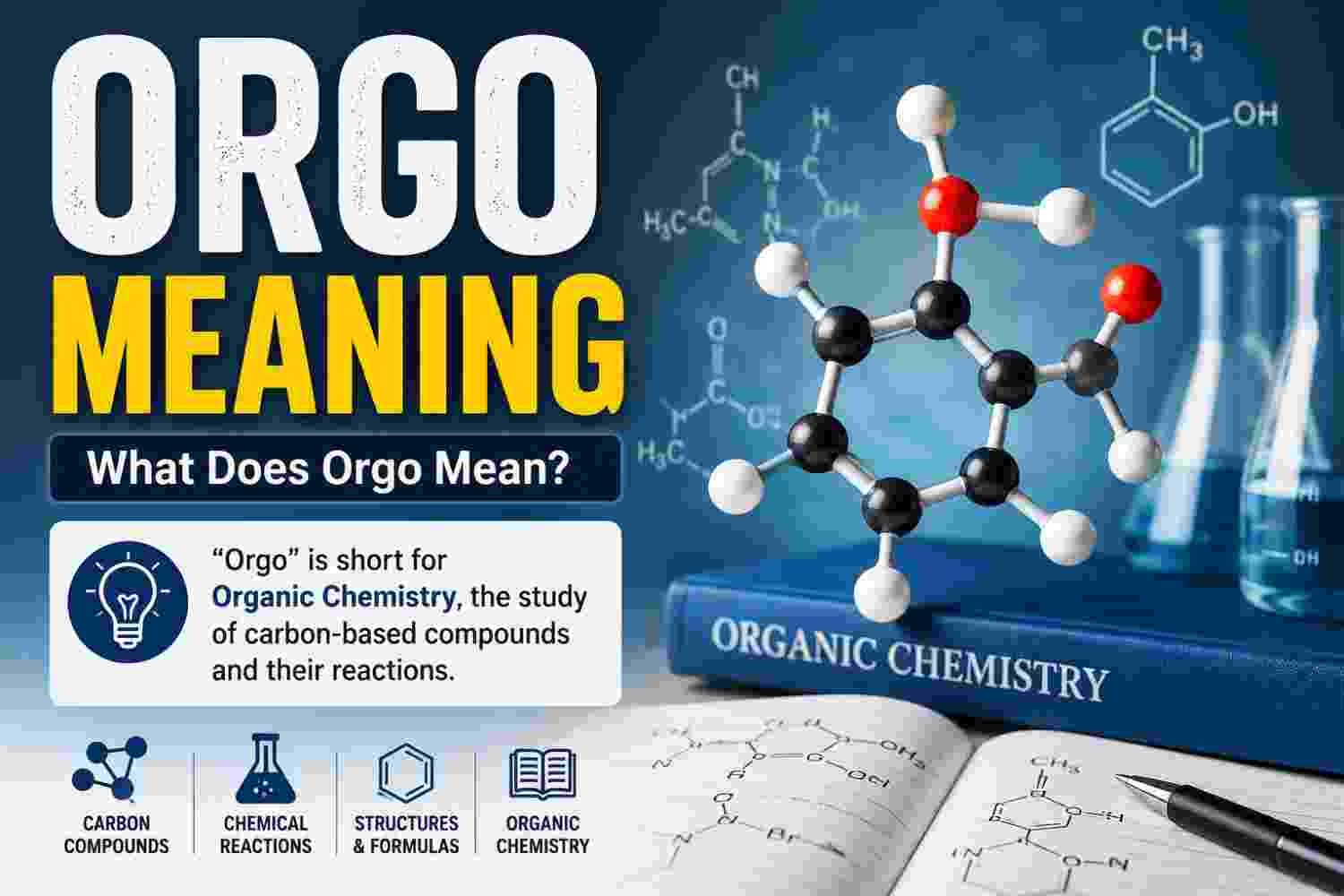
Orgo is simply the affectionate, slightly terrified nickname for organic chemistry. At most U.S. colleges, students shorten “organic chemistry” to “orgo” the same way they turn “chemistry” into “chem.” The term pops up in class registration, Reddit threads, and frantic group chats.
If you hear someone say, “I have orgo at 9 a.m.,” they mean the two-semester organic chemistry sequence. It focuses on carbon-based molecules, reaction mechanisms, and synthesis pathways. The name feels casual, but the course behind it is not.
Orgo meaning can also shift slightly by region. Some schools say “o-chem” instead, especially on the West Coast. But the core meaning stays identical: the class where you learn why molecules react the way they do.
Here are the common names students use for the same course:
- Orgo – popular on the East Coast and in pre-med circles
- O-chem – common on the West Coast and in some universities
- Organic – used by professors, advisors, and formal course catalogs
- The weed-out course – what many pre-meds call it after week three
Why Students Fear Orgo More Than the Word Itself
The fear attached to orgo meaning is not really about the word. It comes from the course’s reputation as a gatekeeper. Organic chemistry demands a different kind of thinking than general chemistry, and many students are not ready for that shift.
General chemistry often rewards math skills and plugging numbers into formulas. Orgo rewards spatial reasoning, pattern recognition, and the ability to trace electron movement. That change feels like learning a new language while someone throws puzzles at you.
Another reason students panic is the volume. Orgo covers hundreds of reactions, but memorizing them all is a trap. The exam questions twist familiar reactions into unfamiliar forms, so pure recall fails fast.
The pace also leaves little room for recovery. One missed week can snowball because every new mechanism builds on the last one. That is why so many students feel behind by midterms.
The Hidden History Behind the Orgo Shortcut
The “orgo” abbreviation likely started in pre-med circles because “organic chemistry” is a mouthful. Students love shortcuts, and “orgo” caught on faster than “o-chem” in many East Coast schools. It became a quick code for a shared stressful experience.
The course itself has older roots. Organic chemistry grew into a formal discipline in the 19th century, when chemists began studying carbon compounds from living organisms. The modern two-semester college version became a standard pre-med requirement decades ago.
The nickname stuck because it fit the culture. Saying “orgo” signals that you belong to the group of students who know exactly how tough the class is. It is part slang, part survival badge.
Is Orgo Really That Hard? Let’s Look at the Numbers
Organic chemistry has a reputation, but the numbers show why it is called a weed-out course. The data below reflects common ranges reported across large public universities and student surveys.
| Metric | Typical Range / Insight | What It Means for You |
|---|---|---|
| DFW rate in Orgo I | 25–40% at large public universities | Nearly one in three students retakes or changes path |
| Students who practice mechanisms weekly | Pass rates often above 80% | Consistent work beats raw IQ |
| Night-before crammers | Fail or withdraw at much higher rates | Cramming fails because reactions build |
| Time recommended per credit hour | 2–3 hours outside class per credit | A 4-credit orgo class needs 8–12 weekly hours |
These numbers are not meant to scare you. They are a reality check. The students who treat orgo as a daily practice course, not a last-minute memorization contest, tend to pass.
The data also exposes a common lie. Many students believe they are failing because they are not smart enough. In reality, they are failing because their study method does not match the course structure.
7 Proven Killer Tips to Ace Orgo Without Burning Out
These tips do not rely on all-nighters or photographic memory. They work because they follow how the brain actually learns mechanism-heavy material.
Tip 1: Treat Reaction Maps Like a Language, Not a List
Most students fail orgo because they try to memorize 200 isolated reactions. That approach collapses the first time a professor twists the molecule. Instead, group reactions by electron movement: nucleophile attacks electrophile, leaving group leaves.
Build one master map per functional group. Label the electron-rich and electron-poor atoms. Connect every reaction to the same movement pattern.
Tip 2: Rewrite Notes the Same Day
Memory fades fast. If you wait a week to rewrite your orgo notes, you have already lost the small details. Spend 15 minutes after class turning messy notes into clean, numbered steps.
This is not busywork. Rewriting forces your brain to organize the material and exposes gaps before they become exam disasters.
Tip 3: Use Active Recall Before You Feel Ready
Do not reread the textbook until you feel confident. Rereading feels productive, but it is passive. Close the book and redraw a mechanism from memory. The struggle is where real learning happens.
Active recall works because it strengthens the neural pathways you need on exam day. You are training for the actual performance, not just recognizing what looks familiar.
Tip 4: Find Old Exams Early
Professors recycle question styles more than they admit. Ask upperclassmen, pre-med clubs, or course archives for previous exams. Treat them as diagnostic tools, not cheat sheets.
Use old exams to spot the patterns. Notice how mechanisms are tested, how synthesis questions are framed, and which functional groups appear most often.
Tip 5: Turn Office Hours Into Free Tutoring
Office hours are not for emergencies. Walk in every week with one messy mechanism or one wrong homework problem. Professors and TAs will explain the why, and you will stop guessing.
Regular attendance also signals that you care. When final grades sit on the border, that relationship can quietly help you.
Tip 6: Master the “Why” Behind Electrons
Orgo is a story about electron flow. Every mechanism follows the same logic: electrons move from high electron density to low electron density. If you can trace that movement, you can solve unfamiliar reactions.
Do not just memorize arrows. Ask why the nucleophile attacks that carbon and why the leaving group leaves. That understanding turns a list of reactions into a predictable system.
Tip 7: Protect Sleep the Week Before Exams
Pulling all-nighters before orgo exams backfires. Sleep deprivation lowers working memory, which you need for synthesis problems. Aim for seven hours, and review mechanism maps in the morning.
Your brain consolidates memory during sleep. A rested student who practiced daily will outperform an exhausted crammer almost every time.
Common Misconceptions About Orgo Meaning and the Course
The stories around orgo create more fear than the class itself. Let’s clear up a few myths.
- Myth: Orgo is pure memorization. Reality: It is about patterns and electron flow.
- Myth: You must be a genius to pass. Reality: Consistent practice and active recall matter more than raw talent.
- Myth: Orgo is only for future doctors. Reality: It is required for many science and engineering paths.
- Myth: A bad gen chem grade means you will fail orgo. Reality: Many students who dislike math do better in the visual logic of orgo.
These myths spread because students repeat them without testing them. You do not have to accept the fear as fact.
How Orgo Meaning Shifts in Different Contexts
The phrase “orgo meaning” changes slightly depending on where you hear it. Context tells you what someone actually means.
- In group chats: Shared suffering, last-minute study plans, and exam panic.
- In career advising: A pre-med prerequisite and a major filter.
- In research: Organic synthesis as creative problem-solving.
- On the East Coast: Usually “orgo.”
- On the West Coast: Often “o-chem.”
Understanding the context helps you read the room. But in almost every college setting, orgo meaning points back to organic chemistry.
FAQs About Orgo Meaning
Is orgo just short for organic chemistry?
Yes. Orgo is the informal student name for organic chemistry, especially at U.S. colleges. It typically covers the two-semester sequence on carbon compounds, mechanisms, and synthesis.
What does orgo mean in text?
In text, “orgo” almost always means the organic chemistry course. If a friend texts “studying for orgo,” they are preparing for an exam, not talking about an organization.
Why do students say orgo instead of organic chemistry?
Students shorten “organic chemistry” because the full name is long and the course comes up constantly. “Orgo” works as a quick code for shared stress, class schedules, and pre-med survival.
How hard is orgo compared to general chemistry?
Orgo is harder for most students because it rewards spatial reasoning and mechanism logic over math. General chemistry leans on equations; orgo demands that you visualize how molecules interact.
Can I pass orgo if I struggled in gen chem?
Yes, but you need a different study method. Many students who dislike math do better in orgo because it is more visual. Practice drawing mechanisms and using molecular model kits from day one.
What is the best way to study for orgo?
The best way is active recall with daily mechanism drawing. Rewrite notes, build reaction maps, and test yourself with blank pages. Avoid passive rereading and last-minute cramming.
Does orgo meaning change outside college?
Rarely. Outside campus, “orgo” may refer to an organic product or a brand, but the dominant college meaning remains organic chemistry. Context usually makes the intended meaning clear.
Final Verdict: What Orgo Should Mean for You
Orgo meaning is simpler than the panic around it. It is a challenging but learnable course built on electron flow, patterns, and consistent practice. Once you stop treating it as a memory contest, the fear shrinks.
Use the seven tips as your weekly system. Draw mechanisms until they feel like directions, not foreign symbols. Find old exams, protect sleep, and ask for help before the exam week hits.
That is the real secret. Orgo is not a gatekeeper designed to crush you. It is a filter for problem-solving under pressure, and you can pass it with the right habits.