Humility Meaning: The Unspoken Truth Behind True Inner Strength
You have probably met someone who stayed quiet in a meeting, let others take credit, and still walked away with the most respect in the room. That person understood something most people miss. Humility is not weakness. It is not lowering your head or letting people walk all over you. Real humility meaning is a quiet, unshakeable confidence that does not need to shout to prove its worth.
In this article, you will learn what humility actually means, why it terrifies arrogant people, and how you can build it without becoming a doormat. No fluff, no recycled quotes. Just the raw, practical truth that will change how you see yourself and others.
What Is Humility Meaning? Breaking the Myth
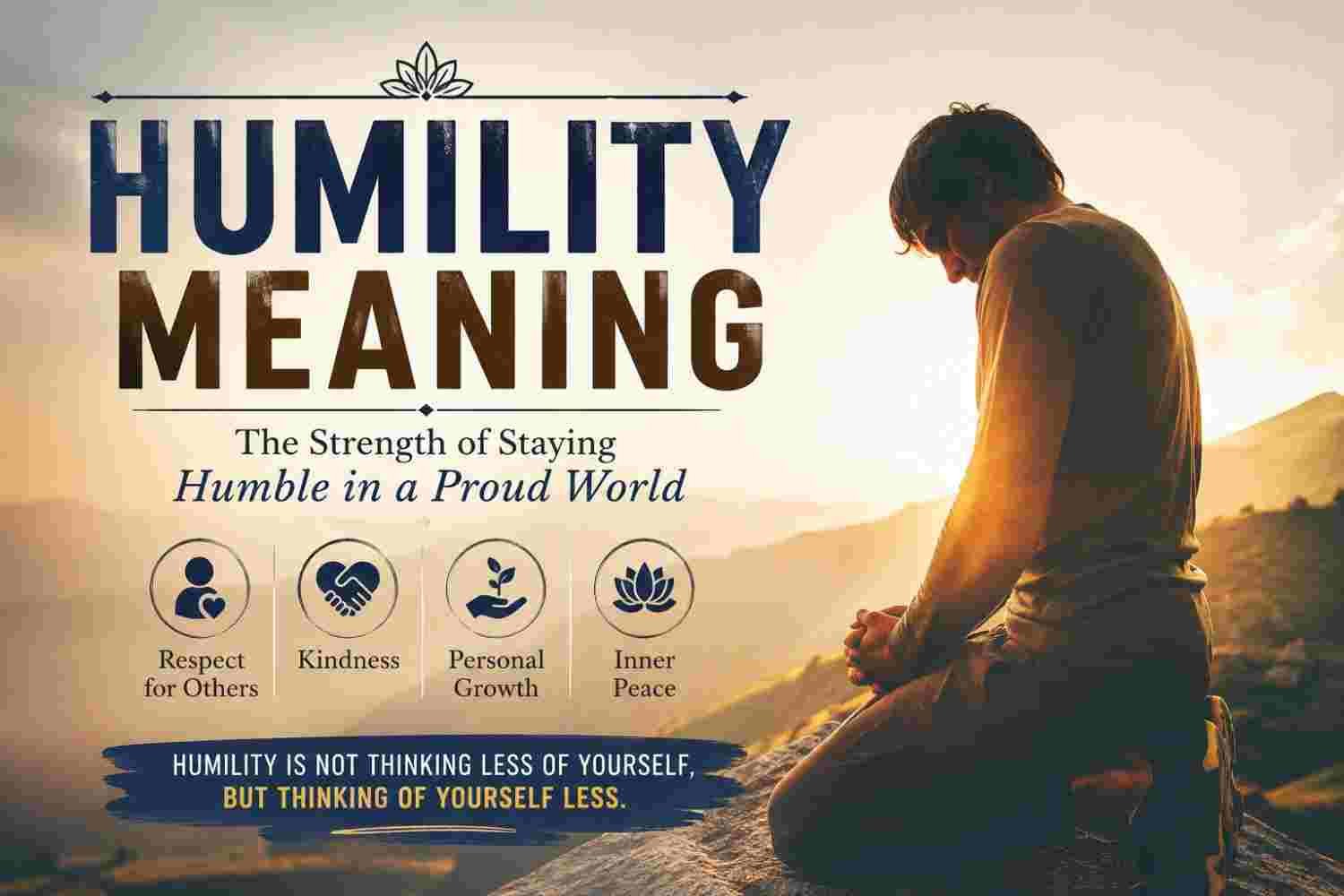
Most people think humility means thinking less of yourself. That is dead wrong. True humility is thinking of yourself less, not thinking less of yourself. It is the ability to see your own value without needing applause, and to see others’ value without feeling threatened.
When you understand humility meaning correctly, you stop comparing. You stop competing for attention. You simply do good work, treat people with respect, and let the results speak. Arrogance screams for validation. Humility quietly earns it.
Humility vs. Low Self-Esteem: The Critical Difference
A lot of people confuse humility with low self-esteem or shyness. That confusion keeps them stuck. Low self-esteem says, “I am not good enough.” Humility says, “I am good enough, and so are you.” That is a massive difference.
Arrogance, on the other hand, says, “I am better than you.” It feeds on comparison and fear. Here is a quick table to clear the fog.
| Trait | Humility | Low Self-Esteem | Arrogance |
|---|---|---|---|
| Self-view | Accurate, balanced | Negative, self-critical | Inflated, fragile |
| Response to praise | Grateful, deflects credit | Dismisses or feels unworthy | Demands more, exaggerates |
| Treatment of others | Respectful, curious | Fearful, avoidant | Condescending, dismissive |
| Inner state | Calm, secure | Anxious, uncertain | Defensive, insecure |
| Reaction to mistakes | Learns, owns them | Blames self harshly | Blames others, hides errors |
This table shows why humble people often outlast arrogant ones. They do not waste energy protecting a fake image. They spend that energy growing.
The Psychology Behind Genuine Humility
Psychologists have studied humility for decades. The findings are surprisingly consistent. Humble people are more emotionally stable, more open to feedback, and more resilient under pressure. They also build stronger relationships because people trust them faster.
One reason is simple. When you are humble, you listen. And listening is the fastest way to make someone feel valued. In a world where everyone talks, the person who truly listens becomes magnetic.
Why Humble People Are Actually More Confident
You might think confident people talk a lot and dominate rooms. That is often insecurity wearing a loud mask. Real confidence does not need constant external validation. Humble people have that real confidence. They know their strengths and limitations without drama.
Here is what genuine humility gives you that arrogance never can:
- Deeper friendships based on trust, not competition
- Faster learning because you admit what you don’t know
- Lower stress because you stop pretending to be perfect
- Stronger leadership because people follow someone who listens
- Long-term respect that grows quietly instead of fading quickly
7 Proven Ways to Cultivate Deep Humility
Building humility is not about becoming passive. It is about becoming so secure that you no longer need to prove anything. These seven methods work. They are uncomfortable at first, but that discomfort is where the growth lives.
1. Practice Radical Honesty About Your Mistakes
When you mess up, say it out loud. “I was wrong. Here is what I will do differently.” That sentence alone will set you apart from 90% of people. It builds trust faster than any grand gesture.
2. Ask More Questions Than You Answer
Curious people are humble people. Next time you feel the urge to give your opinion, ask a question instead. “What do you think?” or “How did you arrive at that?” You will learn more and make the other person feel respected.
3. Give Credit Before You Take It
When a project succeeds, name the people who helped. Publicly. Without expecting anything back. This single habit rewires your brain away from ego and toward gratitude.
4. Spend Time with People Who Challenge You
If everyone around you agrees with you, you are living in an echo chamber. Seek out people who think differently. Listen without arguing. You do not have to change your mind, but you must understand theirs.
5. Serve Someone Who Can Never Repay You
Humility grows fastest when you help someone who has nothing to offer you in return. Volunteer, mentor, or simply listen to a struggling friend. The act of serving without strings kills pride at its root.
6. Accept Compliments Without Deflecting
This one surprises people. When someone praises you, do not say, “Oh, it was nothing.” That is a subtle form of pride. Instead, say, “Thank you. I appreciate that.” Accepting praise with grace is actually humble because it honors the other person’s perspective.
7. Review Your Day with Brutal Self-Honesty
Each night, ask yourself two questions. “What did I do well today?” and “Where did my ego get in the way?” Write the answers. This daily practice keeps you grounded and prevents self-deception.
Real-Life Examples of Humility in Action
You do not need to look far to see humility changing lives. Think of the best boss you ever had. Chances are, that boss did not micromanage or brag. They asked questions, admitted when they did not know, and celebrated your wins.
The Quiet Power of Humble Leaders
Research from Jim Collins’ famous book Good to Great found something fascinating. The most successful companies were often led by what he called “Level 5 leaders.” These leaders combined fierce resolve with deep personal humility. They were not flashy. They were not on magazine covers. They just did the work and gave credit to their teams.
That is the quiet power of humility. It builds teams that last because people feel safe, valued, and heard. Arrogant leaders create turnover and fear. Humble leaders create loyalty and innovation.
FAQs About Humility Meaning
What is the true meaning of humility?
Humility means having an accurate view of yourself—your strengths and weaknesses—without arrogance or self-hatred. It is the ability to value others as much as you value yourself and to act without needing constant praise.
Is humility the same as being shy or weak?
No. Shyness is social anxiety. Weakness is an inability to stand up for yourself. Humility is strength under control. Humble people can be assertive, confident, and decisive. They just do not need to dominate others to feel good.
Can you be humble and successful at the same time?
Absolutely. In fact, many of the most successful people are humble because they know they did not get there alone. Humility allows you to learn from failures, build strong teams, and stay hungry for growth without burning out on ego.
How do I practice humility at work?
Start by giving credit to colleagues publicly. Admit when you do not know something. Ask for feedback and actually use it. These small actions build a reputation as someone trustworthy and coachable.
What are the signs of a humble person?
Humble people listen more than they talk. They admit mistakes quickly. They celebrate others’ wins without jealousy. They are comfortable with silence and do not need to fill every gap with their own voice. They also ask for help when needed.
Why is humility important in relationships?
Humility prevents the toxic cycle of blame and defensiveness. When you are humble, you can say “I was wrong” and mean it. That single phrase resolves more conflicts than any grand romantic gesture. Humility builds safety, and safety builds intimacy.
Final Thoughts: Why Humility Is Your Secret Weapon
If you take one thing from this article, take this. Humility is not about being small. It is about being real. The world is full of people performing confidence, performing success, performing happiness. The person who can simply be honest, listen, and grow without ego becomes unforgettable.
Start today. Pick one of the seven methods above and practice it for a week. Notice how people respond. Notice how you feel. You will never want to go back to the exhausting game of proving yourself.