Decollete Means: The Fashion Term Everyone Mispronounces But Nobody Explains
You’ve heard fashion editors toss around “decollete” like everyone already knows what it means, and you’re too embarrassed to ask. That confusion ends today, because we’re breaking down exactly what decollete means, where it comes from, and how to actually use it in real conversation.
By the time you finish this guide, you’ll never confuse decollete with a random French word again — you’ll know its true meaning, its style rules, and the mistakes most folks make when they attempt to do it.
What Does Decollete Actually Mean?
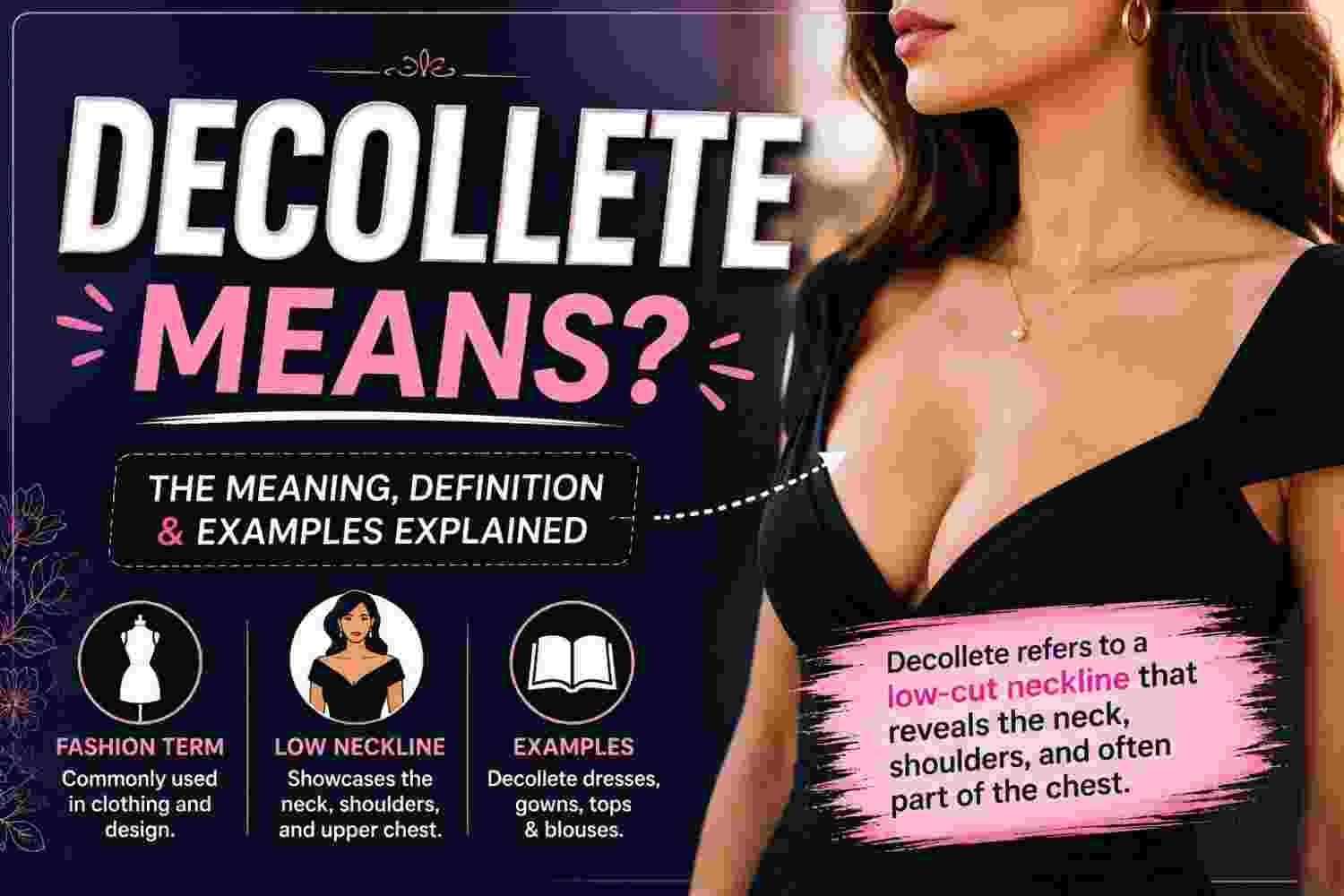
Decollete means a low-cut neckline on a dress, top, or gown that reveals the collarbone, upper chest, or shoulders. It comes from the French word “décolleté,” which literally translates to “with an exposed neck.”
In modern fashion language, decollete refers to both the style of the neckline itself and the exposed skin area it reveals. Stylists and designers use the term constantly, so understanding what decollete means instantly upgrades how you read fashion articles and red carpet coverage.
The Origin Behind the Word
The French root of decollete traces back centuries, originally describing aristocratic gowns worn at royal courts. Back then, a deep decollete signaled wealth and status rather than just style.
Over time, the word crossed into English fashion vocabulary without losing its French pronunciation. That’s exactly why so many people know the look but stumble over saying “day-koll-TAY” out loud.
Decollete vs Decolletage: What’s the Difference?
This mix-up trips up almost everyone, so let’s settle it clearly.
- Decollete — Usually used as an adjective, describing a garment (“a decollete gown”)
- Decolletage — Usually used as a noun, describing the exposed area itself (neck, shoulders, upper chest)
Both words share the same French root, and in casual conversation, people often use them interchangeably without much pushback from fashion purists.
Types of Decollete Necklines You Should Know
Not every decollete looks the same, and knowing the variations helps you pick the right style for your body and occasion.
Common Decollete Styles
Here’s a breakdown of the most popular decollete cuts seen on runways and red carpets:
- Sweetheart Decollete — Heart-shaped neckline that flatters most body types
- Plunging Decollete — Deep V-cut reaching toward the waistline
- Off-Shoulder Decollete — Exposes shoulders while keeping the front more modest
- Square Decollete — Straight-cut neckline offering a structured, elegant look
- Illusion Decollete — Sheer mesh panel creating the appearance of skin exposure
Each style changes the overall vibe, so a plunging decollete reads as bold and dramatic, while a sweetheart decollete feels romantic and classic.
Selecting the Appropriate Decollete for Your Body Type
Fashion stylists agree that decollete choice should complement your frame, not fight against it.
- Petite frames — A sweetheart decollete adds visual balance without overwhelming
- Broad shoulders — A plunging decollete elongates the torso beautifully
- Fuller bust — A square decollete provides structured support and coverage
- Athletic build — An off-shoulder decollete softens strong shoulder lines naturally
Understanding what decollete works with your proportions saves you from awkward fitting-room disappointments.
Decollete in Fashion History: A Quick Timeline
Decollete necklines didn’t appear overnight — they evolved dramatically across different fashion eras.
| Era | Decollete Style | Cultural Significance |
|---|---|---|
| 1700s French Court | Deep, wide decollete | Status symbol among nobility |
| Victorian Era | Modest, high-cut necklines | Decollete reserved for evening wear only |
| 1920s Flapper Era | Dropped waist, subtle decollete | Symbol of women’s growing independence |
| 1950s Hollywood | Sweetheart decollete | Glamour icons like Marilyn Monroe popularized it |
| 2020s Red Carpet | Plunging, illusion decollete | Bold statement of confidence and individuality |
Quick human analysis: What’s fascinating here is how decollete has always mirrored cultural attitudes toward women’s autonomy. Every time society loosened its grip on modesty expectations, decollete necklines got a little braver — it’s basically a visual timeline of shifting social freedom.
How to Style a Decollete Neckline Without Overdoing It
Wearing decollete confidently comes down to balance, not just boldness.
Accessorizing Around a Decollete Cut
The wrong accessories can make even a beautiful decollete gown look messy or overdone.
- Keep necklaces minimal or skip them entirely with a deep decollete
- Choose statement earrings instead to draw eyes upward
- Avoid heavy bracelets that compete visually with an exposed neckline
- Let the decollete itself be the focal point, not a supporting act
Common Decollete Styling Mistakes
Even fashion-forward people mess this up more often than you’d think.
Wearing a plunging decollete without proper undergarment support creates an unflattering silhouette rather than an elegant one. Pairing a dramatic decollete with equally busy patterns or prints also pulls focus away from the neckline’s natural elegance.
Frequently Asked Questions
What does decollete mean in simple terms?
Decollete means a low, revealing neckline on clothing that exposes the collarbone, shoulders, or upper chest area, originally derived from the French word for “exposed neck.”
How do you pronounce decollete correctly?
It’s pronounced “day-koll-TAY,” with the emphasis landing on the final syllable, staying true to its original French pronunciation.
Is decollete only used for dresses?
No, decollete can describe necklines on tops, gowns, blouses, and even swimwear, essentially any garment featuring a deep or exposed neckline style.
What’s an example of a decollete outfit?
A classic example includes an evening gown with a sweetheart or plunging neckline, commonly worn to formal events, weddings, or red carpet appearances.
Can decollete necklines work for casual outfits?
Yes, a subtle decollete cut on a casual top or sundress works fine for daytime settings, especially when paired with simple, understated accessories.
Is decolletage the same word as decollete?
They share the same French origin, but decolletage usually refers to the exposed skin area itself, while decollete typically describes the neckline style or garment.
Why do fashion magazines use the word decollete so often?
Fashion writers use decollete because it’s the precise industry term for describing neckline depth and style, making it easier to communicate specific design details accurately.
Final Verdict on What Decollete Means
Decollete isn’t just a fancy French word fashion people throw around to sound sophisticated — it’s a genuinely useful term once you understand its meaning and history. Now that you know what decollete means, you can confidently choose the right neckline style for your body, your event, and your personal comfort level.
Next time you’re shopping for a gown or scrolling red carpet photos, you’ll spot decollete details instantly instead of guessing. That’s the real insider advantage most people never bother learning.