Opt Meaning in Text: 7 Smart Ways to Decode Every Message
You are not alone if a short message like “opt” has ever made you pause mid-scroll. The word looks simple, but its meaning can shift completely depending on who sent it and why. Some people use it as a verb, while others toss it around as an acronym or slang.
That tiny three-letter word has caused plenty of confusion in group chats, work threads, and late-night planning texts. The good news is that you can decode it quickly once you understand the context. This guide breaks down every major meaning, real examples, and the smartest ways to reply.
By the time you finish reading, you will never second-guess “opt” again. You will also learn how to use it without sounding robotic or accidentally agreeing to something you did not want.
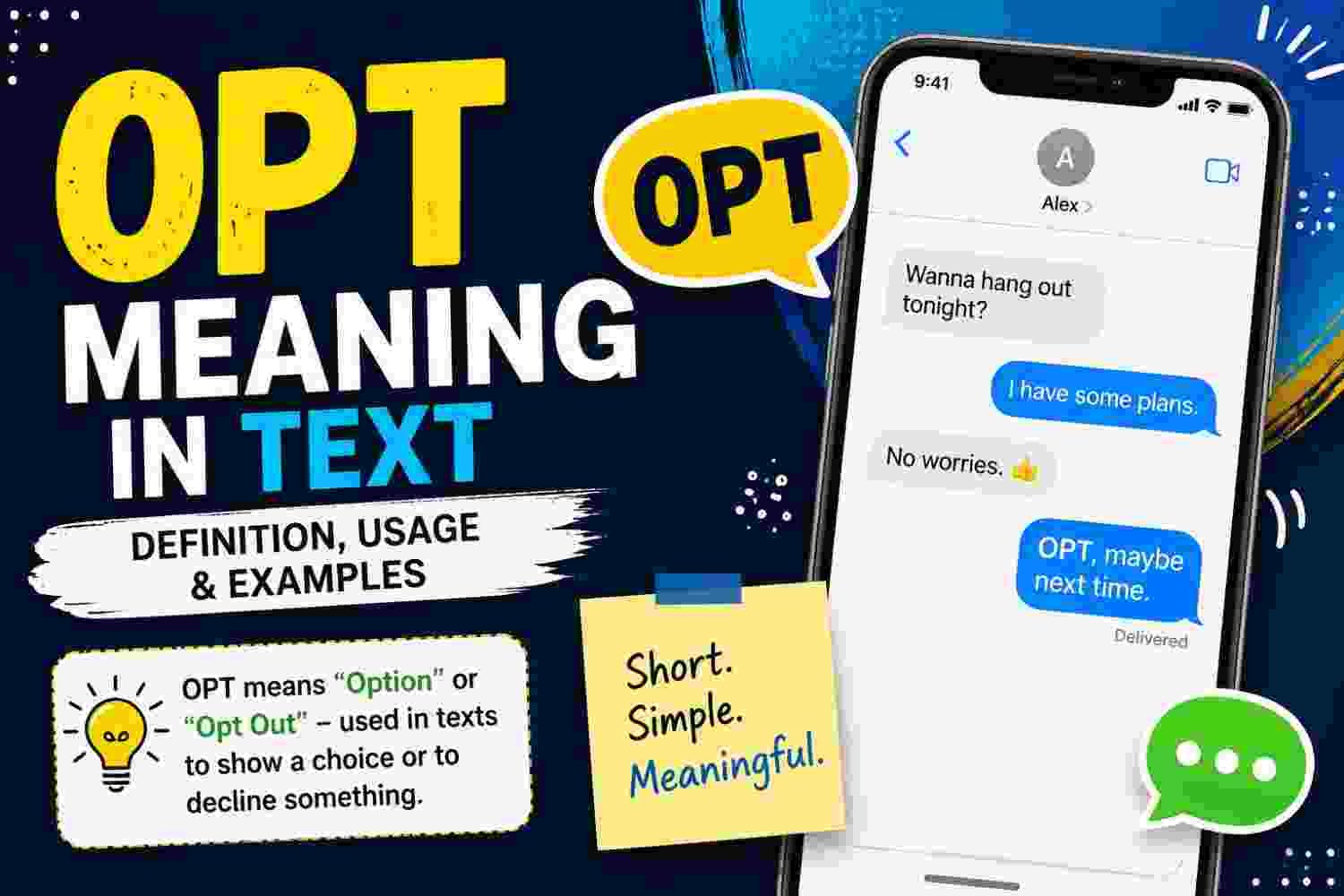
What Does Opt Mean in Texting? The Simple Definition
At its core, opt is a verb that means to choose or make a decision. It comes from the Latin word “optare,” which means to select or wish for something. When someone uses “opt” in a text, they are usually telling you about a choice they made or plan to make.
For example, a friend might write, “I’ll opt for the 7 p.m. movie.” That simply means they picked the earlier showtime. It is a faster way to say “I choose” or “I prefer” without typing more words than necessary.
In digital communication, opt often shows up in the phrases “opt in” and “opt out.” These terms describe whether a person agrees to receive messages or participate in something. So if a friend says “I’m going to opt out,” they are not being rude.
They are just choosing to step away from a plan or a group thread. Context is everything when this word appears in your inbox.
7 Hidden Meanings of OPT in Text and Social Media
1. Opt as a Verb: Choosing Something
The most common meaning is still the verb form. People use it to state a preference or decision without writing a full sentence. A text like “I’ll opt for sushi” is casual, direct, and easy to understand.
You will see this in planning chats, work polls, and even dating app conversations. It works because it saves characters and keeps the tone light. If someone says “Which one did you opt for?” they are asking which option you chose.
This usage is not slang. It is standard English that happens to work well in fast-moving digital conversations. You can use it with friends, coworkers, and family without raising any eyebrows.
2. OPT as “Optional”
When written in all caps, OPT can be shorthand for optional. This is common in event invites, gaming lobbies, school group chats, and social media posts. Example: “Bring snacks, but it’s OPT” means snacks are not required.
That tiny abbreviation removes pressure and keeps the message casual. It tells people they are welcome to join or bring something, but there is no obligation. You will often see it attached to dress codes, assignments, or meetup details.
The meaning changes completely from the verb form. In this case, it is not about choosing something yourself. It is about letting people know that participation is not mandatory.
3. OPT as “Option”
In quick chats, OPT is sometimes used as a clipped form of option. You might see a message like “Which opt did you pick?” in a fast-moving Discord server or Slack thread. It is not formal English, but it saves time.
This shortened version is more common in gaming, tech communities, and younger texters. It works because the context usually makes the meaning clear. If someone is asking about character builds or meeting times, opt clearly means option.
If you are unsure, look at the words around it. The surrounding sentence will almost always tell you whether the person means option, optional, or choose.
4. “Opt In” and “Opt Out” in Text Messages
Businesses use opt in and opt out constantly in SMS marketing and service alerts. Opt in means the person has given permission to receive texts. Opt out means the person has withdrawn that permission.
You have probably seen messages like “Reply STOP to opt out” or “Text YES to opt in for updates.” These are legal and practical phrases designed to protect consumers from unwanted messages. They also give you control over what lands in your phone.
If a brand asks you to opt in, they want clear consent before sending more texts. If you opt out, the messages should stop. This meaning is essential because it directly affects your privacy and inbox.
5. OPT in University and Visa Chats
OPT stands for Optional Practical Training in US immigration and higher education. International students often text friends about “OPT deadlines,” “OPT approval,” or “OPT start dates.” This meaning shows up constantly in campus group chats and visa forums.
Context matters here because this acronym has zero connection to choosing a pizza or replying to a marketing text. It is a serious work authorization program for F-1 visa holders. If someone says “My OPT got approved,” they are sharing big personal news.
This is one of the most misunderstood meanings because it overlaps with the same three letters. If you are in a college or immigrant community, always consider this definition before assuming it means optional.
6. OPT in Gaming and Tech Slang
Gamers sometimes use opt to talk about optimizing a build, loadout, or settings. A message like “Did you opt your settings?” can mean tweaking something for better performance. This is not a dictionary definition, but slang spreads fast in tight communities.
In tech circles, OPT might also refer to optimization in code or system performance. The meaning becomes obvious when the chat is about frame rates, gear, or performance tuning. If you do not know the slang, it can look like a random word thrown into the conversation.
This usage shows how flexible the term has become. The same three letters can shift from a visa program to a gaming tip based entirely on the topic at hand.
7. Opt as a Short Reply for “I Choose That”
Sometimes someone just replies “opt” to an either-or question. It can look cold or dismissive, but it usually means “I choose that one.” A single word can do the job when the conversation is moving quickly.
For example, if you ask “Tacos or pizza?” and someone replies “opt,” they are probably picking the second option or the one just mentioned. It is not the clearest reply, but it is common in rapid back-and-forth chats.
If you need clarity, reply with “Opt for which one?” to keep things moving. That small follow-up can save you from making the wrong reservation or grabbing the wrong food.
How Context Changes the Meaning of Opt
Context is the secret weapon for decoding this word. The same letters can mean choose, optional, option, work authorization, or optimization depending on who sent the message. Reading one word in isolation will almost always create confusion.
| Context | Likely Meaning | Example |
|---|---|---|
| Friend planning dinner | To choose | “I’ll opt for tacos.” |
| SMS from a brand | Opt in / opt out | “Reply YES to opt in.” |
| College group chat | Optional Practical Training | “My OPT starts in June.” |
| Gaming chat | Optimize / option | “Try this opt for higher FPS.” |
| Event invite | Optional | “Dress code is OPT.” |
| Quick decision | I choose that | “Opt.” |
This table shows why you should never assume a single definition. A message from a university student and a text from a marketer can use the exact same letters with completely different intentions. Taking two seconds to check the topic will prevent most misunderstandings.
Real-Life Text Examples of “Opt” and Smart Replies
Seeing the word inside real messages makes the meanings easier to remember. These examples cover the most common scenarios you will run into on a normal day.
- Text: “You can opt in if you want.”
Meaning: You can join or agree.
Reply: “I’ll opt in, thanks.” - Text: “I’m going to opt out of the weekend trip.”
Meaning: They are declining the invite.
Reply: “No worries, catch you next time.” - Text: “The meeting is OPT.”
Meaning: Attendance is optional.
Reply: “I’ll try to make it.” - Text: “My OPT got approved.”
Meaning: Work permit status for an international student.
Reply: “Congrats! When do you start?” - Text: “Which one did you opt for?”
Meaning: Which choice did you make.
Reply: “I opted for the earlier slot.”
These replies show you can respond naturally without overthinking the word. Once you identify the context, the correct answer becomes obvious.
7 Common Mistakes People Make with “Opt” in Text
Many people misuse or misread this tiny word every day. Avoiding these mistakes will make your texts clearer and keep you from accidental confusion.
- Assuming “OPT” always means optional when it can be visa training.
- Ignoring opt-out requests in group chats and continuing to message someone.
- Using “opt” in formal emails when “choose” sounds more professional.
- Confusing “opt in” with “opt out” and giving the wrong response.
- Writing “OPT” in all caps as a verb, which looks like an acronym.
- Not asking for clarity when the context is genuinely unclear.
- Overusing “opt” as a one-word reply and sounding dismissive.
Each mistake is easy to fix. A little extra context or a follow-up question can turn a confusing message into a clear conversation.
How to Use Opt Correctly in Your Own Texts
Using opt correctly is simpler than it looks. The key is to match the word to the situation and avoid all caps unless you truly mean an acronym.
- Use “opt for” when naming a choice: “I’ll opt for the salad.”
- Use “opt in” when agreeing to join: “I’ll opt in for the updates.”
- Use “opt out” when leaving or declining: “I’ll opt out of this round.”
- Avoid all-caps unless you mean optional, option, or Optional Practical Training.
- Add one extra word to soften a one-word reply: “I’ll opt for that.”
These small habits make your messages feel human and clear. They also prevent the other person from screenshotting your text and asking friends what you meant.
Latest Text Opt-In Statistics Worth Knowing
Text opt-in behavior has become a huge part of digital communication. Recent industry studies show that people respond faster and more often to text messages than to email or phone calls.
| Statistic | Value |
|---|---|
| SMS open rate | 98% |
| Response rate for opt-in campaigns | 45% |
| Consumers who prefer text updates | 69% |
| Businesses using text opt-in compliance | 91% |
These numbers explain why brands push opt-in messaging so hard. Text messages get seen almost immediately, and people are more likely to engage. The same principle applies in personal chats, where a clear opt-in or opt-out reply keeps relationships smooth.
Frequently Asked Questions About Opt Meaning in Text
What does opt mean in text slang?
In casual texting, opt usually means to choose or pick something. It can also be short for optional when written in all caps. The exact meaning depends on the sentence around it.
Does OPT mean optional or option?
It can mean both. In quick chats, OPT is often shorthand for optional or option. If someone writes “That step is OPT,” they mean it is not required. If they write “Pick an OPT,” they mean pick an option.
What does opt in and opt out mean in text messages?
Opt in means you agree to receive messages or join something. Opt out means you no longer want to receive messages or participate. Businesses use these terms to get permission and let you withdraw it.
Why did someone reply with just “opt”?
A one-word “opt” reply usually means “I choose that” or “I’ll take that option.” It is common in fast-moving conversations. If it feels unclear, ask a quick follow-up question.
What is OPT for international students?
OPT stands for Optional Practical Training. It is a work authorization program for F-1 visa students in the United States. This meaning is common in college group chats and visa forums.
Can I use opt in formal writing?
Yes, as a verb it is perfectly acceptable. You can write “She opted for the early flight” in a professional email. However, “choose” or “selected” may sound slightly more formal in certain business documents.
How do I opt out of unwanted text messages?
Reply with the word STOP to most business text messages. For personal group chats, simply say you are opting out or ask to be removed. Legitimate senders must honor opt-out requests.
Final Tip: When in Doubt, Ask for Context
Opt is tiny but packed with meaning. The safest move is to read the sentence around it instead of guessing. A quick “Do you mean choose or optional?” can prevent a lot of confusion.
Now you know how to decode this word in texting, marketing, gaming, and university settings. You can reply naturally and use it without hesitation. The next time “opt” pops up on your screen, you will already know exactly what to do.