Antifa Meaning: What This Word Really Stands For
You’ve seen the word flash across headlines, Twitter threads, and dinner table arguments. But do you actually know what it means, or are you just repeating what a talking head told you?
This guide breaks down the antifa meaning in plain, honest language—no political spin, just the facts you can actually use.
What Does Antifa Actually Mean?
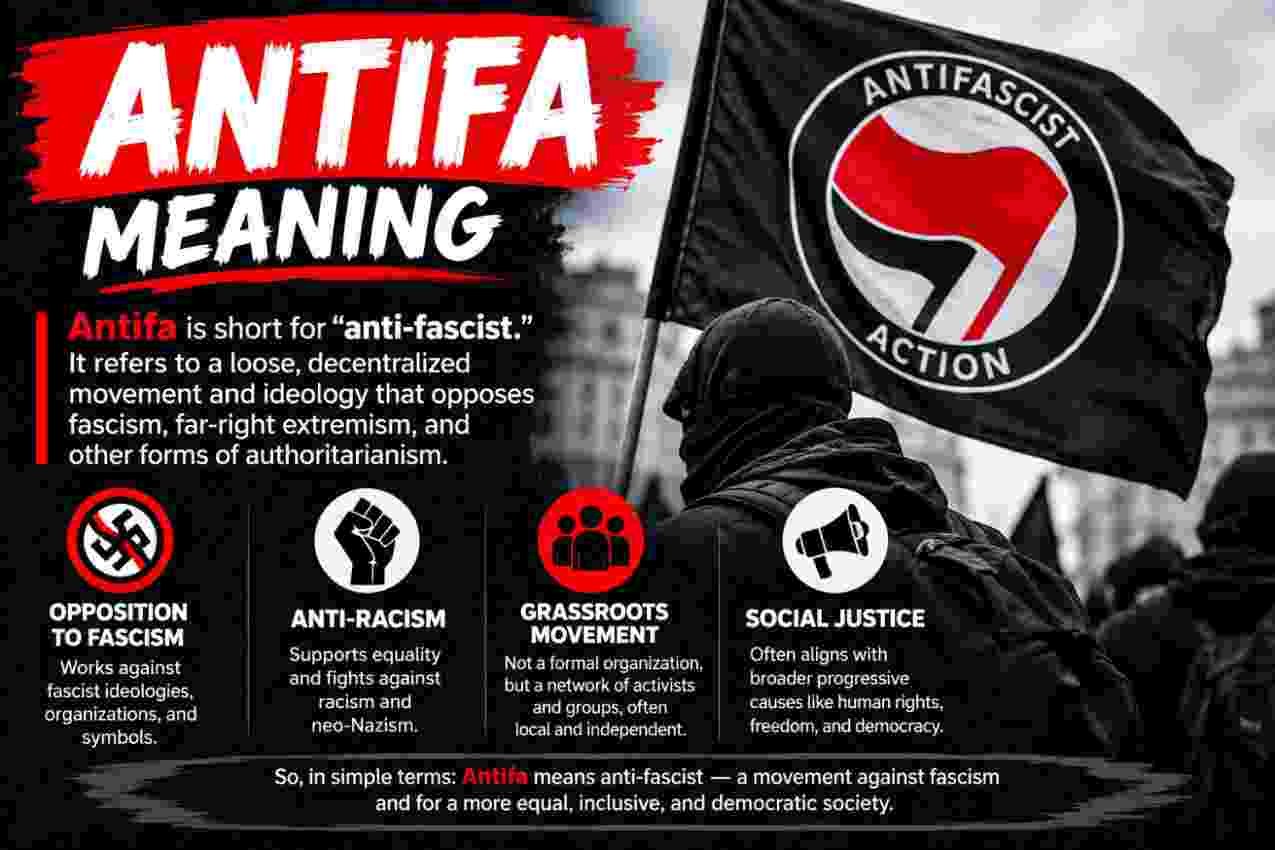
The word itself is short for “anti-fascist.” It’s a contraction, not an acronym, and it traces back to German political movements from the early 20th century.
At its core, the term describes a political stance rather than a single group with membership cards. People who call themselves antifa are stating they oppose fascism, authoritarianism, and organized racism.
The Simple Breakdown
Here’s the word broken into its plain-English parts:
- Anti – against, opposed to
- Fa(scist) – shorthand for fascism, a far-right authoritarian ideology
- Combined – a stance of active opposition to fascist movements
That’s the literal meaning. What gets complicated is how the word is used today.
Where the Term Actually Came From
Understanding history here matters more than most people realize. This isn’t a modern internet invention.
Germany in the 1930s
The original “Antifaschistische Aktion” formed in Germany in 1932. It was organized by the Communist Party of Germany as a direct response to the rising Nazi movement.
This group aimed to physically and politically resist Hitler’s followers before they seized full control. Their logo—two flags, one red and one black—still shows up in modern antifa symbolism today.
Post-War Europe and Beyond
After World War II, anti-fascist sentiment spread through parts of Europe as a general political identity. Countries that had suffered under fascist rule kept the anti-fascist label alive in different forms.
By the late 20th century, similar movements popped up in the UK, and later in the United States, often centered around opposing neo-Nazi and white supremacist organizing.
How Antifa Works as a Modern Movement
Here’s where a lot of confusion sets in. Antifa isn’t a single organization with a headquarters, a president, or a membership list.
A Decentralized Idea, Not a Company
Think of it less like a corporation and more like a loose network of local groups and individuals. There’s no central leadership issuing orders to every chapter.
- Local groups form independently in different cities
- Tactics and intensity vary widely by region and by individual
- There’s no official spokesperson representing “all of antifa”
- Members often stay anonymous for safety and privacy reasons
This decentralization is exactly why the label gets applied so broadly—and so inconsistently—in news coverage.
Common Activities Associated With the Movement
People identifying with this stance have engaged in a range of actions over the decades. Some are peaceful and organizational; others have drawn serious controversy.
- Monitoring and publicly identifying members of hate groups
- Organizing counter-protests at rallies by extremist organizations
- Distributing educational materials about fascism’s history
- In some documented cases, physical confrontations with opposing groups
It’s worth noting that experiences and tactics differ dramatically from one local group to another.
The Political Debate Around the Term
This is the part that turns dinner conversations into arguments. The antifa meaning gets stretched in different directions depending on who’s talking.
How Supporters Frame It
People sympathetic to the movement generally describe it as a necessary check on hate groups. They point to historical moments where unchecked fascism led to devastating consequences.
How Critics Frame It
Critics argue that some actions taken under the antifa banner cross into unlawful violence rather than legitimate protest. They point to specific incidents of property damage or physical altercations as evidence the label covers more than peaceful opposition.
Government and Legal Status
Governments have handled this differently depending on the country and the political moment. In the United States, there have been periods of formal designation debate at the federal level, while in most Western democracies, antifa has not been classified as a formal terrorist organization with legal membership criteria, largely because it lacks a formal structure to designate.
| Aspect | Supporter View | Critic View |
|---|---|---|
| Core Purpose | Resisting fascism and hate | Vague label used to justify unrest |
| Structure | Grassroots, community-based | Unaccountable and unregulated |
| Tactics | Mostly peaceful protest and awareness | Includes property damage, clashes |
| Public Perception | Defenders against extremism | Instigators of chaos |
Quick analysis: This table shows why the term is a lightning rod—both sides are reacting to real events, just weighting different incidents and time periods more heavily.
Symbols and Visual Identity
If you’ve spotted black flags or masked protesters at a rally, you’ve likely seen antifa-associated imagery, even if the people involved weren’t formally affiliated with any group.
Recognizable Visual Cues
- Black bloc tactic—wearing all black clothing, including masks, for anonymity
- The classic two-flag logo (red and black)
- Circle-A anarchist symbolism, though not exclusive to antifa
- Handmade signs referencing anti-fascist slogans
These visuals get borrowed, remixed, and sometimes misused by unrelated groups, which adds another layer of confusion to public understanding.
Why This Word Keeps Trending
Search interest in this term spikes every time a major protest, election cycle, or viral news clip hits social media. People search for clarity because news coverage rarely slows down to explain the basics.
Understanding the antifa meaning helps you separate the historical roots from the modern political football the word has become. That distinction matters if you want to form your own informed opinion rather than borrowing someone else’s outrage.
Frequently Asked Questions
What is the simplest definition of antifa?
Antifa is short for “anti-fascist,” describing people or loosely connected groups opposed to fascism, racism, and authoritarian movements.
Is antifa an organized group with leaders?
No, it functions as a decentralized political stance and network rather than a single organization with formal leadership or membership.
Where did the antifa movement originally start?
It traces back to 1932 Germany, when the “Antifaschistische Aktion” formed to resist the growing Nazi party before World War II.
Is antifa considered a terrorist organization?
Most Western governments have not formally classified it as a terrorist organization, largely because it lacks the formal structure typically required for such designation.
What do the black and red flags mean?
They come from the original 1930s German anti-fascist logo and are still used today as a visual shorthand for the modern movement.
Why does the media use the term so inconsistently?
Because antifa has no central spokesperson, journalists and commentators often apply the label broadly to describe anyone engaging in anti-fascist protest activity, accurate or not.
Can anyone call themselves antifa?
Yes, since there’s no formal membership process, the label is essentially self-applied based on someone’s political stance and actions.
Final Takeaway
The antifa meaning isn’t as mysterious as cable news debates make it seem. It’s a decades-old political stance rooted in opposing fascism, now caught in a modern tug-of-war over tactics and public image.
The real insider tip? Judge specific incidents on their own facts instead of painting an entire loosely connected movement with one broad brush. That’s how you stay informed instead of just reacting.