Devotion Meaning: 7 Hidden Truths That Change Everything
You have been lied to about what devotion actually means. Most people mistake it for blind loyalty, exhausting sacrifice, or a one-way ticket to burnout. But the real definition of devotion is not about losing yourself; it is about finding a profound sense of purpose that makes the hard days feel lighter.
In this deep dive, we are going to shatter the clichés. We will explore the psychological engine behind true devotion, how it differs from simple discipline, and why understanding this distinction is the secret to excelling in your relationships, career, and personal growth. If you have ever felt trapped by your commitments, this is the perspective shift you need.
The Real Definition: What is Devotion Meaning?
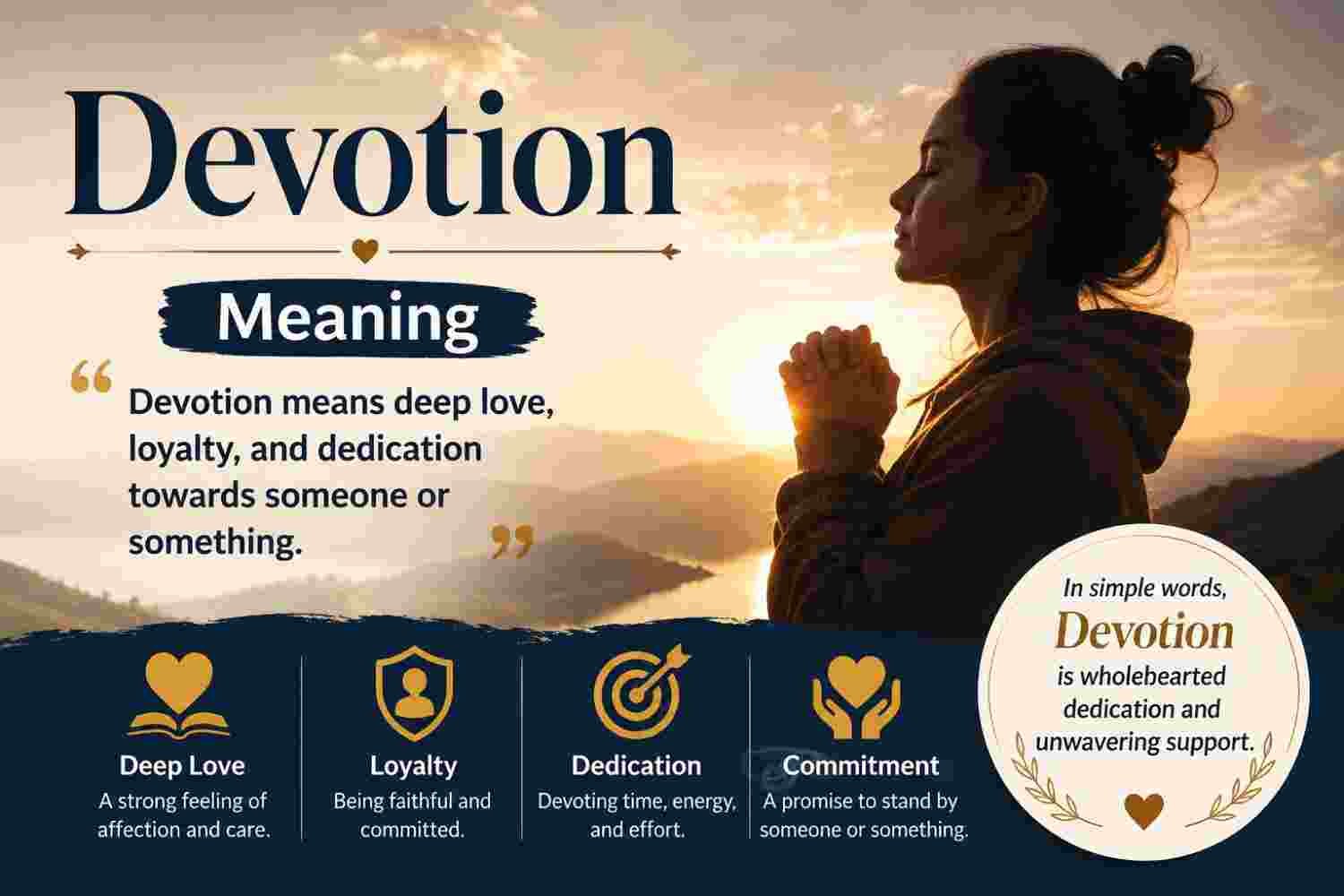
When you strip away the poetic language, the “devotion meaning” boils down to a state of profound dedication. It is the emotional and mental glue that binds you to a cause, person, or practice, even when the initial excitement fades. It is a combination of love, loyalty, and enthusiasm that manifests as consistent action.
The Anatomy of True Devotion
To truly grasp the concept, you must understand that devotion is not a single emotion. It is a cocktail of three critical psychological states.
- Fierce Loyalty: A steadfast allegiance that doesn’t waver when things get difficult or inconvenient.
- Deep Enthusiasm: A genuine excitement about the object of your focus. It isn’t just “showing up”; it is wanting to be there.
- Unwavering Commitment: The decision to stay the course. This is the pragmatic, action-oriented component of the meaning.
How Devotion Meaning Differs From Discipline and Obsession
This is where most people get confused. They use “devotion,” “discipline,” and “obsession” interchangeably, but they are entirely different beasts. Understanding the nuance here is critical for your mental health and your success rate.
The Trap of Discipline
Discipline is mechanical. It is doing the thing because you know you should. It requires willpower, which is a finite resource. Devotion, on the other hand, is energetic. When you are devoted, you don’t need to force yourself; you are pulled by a magnetic desire to improve or nurture.
The Danger of Obsession
Obsession is rooted in anxiety and fear. It is a state of hyper-fixation where your self-worth becomes tangled with the outcome. Devotion is rooted in security. You are committed, but you are not terrified of failure. You are playing the long game.
Here is a breakdown of how these concepts differ in real-world application:
| Concept | Emotional Fuel | Core Motivation | Long-Term Result |
|---|---|---|---|
| Discipline | Willpower | Obligation & Duty | Consistency (often with fatigue) |
| Obsession | Fear & Anxiety | Control & Validation | Burnout or toxic behavior |
| Devotion | Love & Purpose | Growth & Connection | Fulfillment & Resilience |
The Neuroscience of Devotion: Why We Commit
Why do we feel devoted to a sports team, a partner, or a craft? The answer is buried deep in our neurochemistry. It is not magic; it is biology and identity.
The Role of Oxytocin
When you experience devotion, particularly in relationships, your brain releases oxytocin. This is the bonding hormone. It creates a feeling of safety and connection. It literally rewires your brain to view the object of your devotion as a part of your own identity.
Identity Fusion
Psychologists talk about “identity fusion.” This is the point where your personal identity and the group or person you are devoted to become blurred. You stop saying “I support this team” and start saying “We won.” This fusion is the ultimate expression of the meaning of devotion. It transforms external goals into internal needs.
5 Practical Ways to Cultivate Devotion Meaning in Your Life
If devotion is so powerful, how do you manufacture it? Can you force yourself to love something? Not directly. But you can create the environment where devotion naturally takes root.
1. Connect the Action to a Higher Value
You cannot be devoted to a spreadsheet. But you can be devoted to the financial freedom that spreadsheet provides. Stop focusing on the micro-task and constantly remind yourself of the macro-vision. If you hate exercising, connect the act to the value of longevity and being able to play with your grandkids.
2. Stop Relying on Motivation, Start Relying on Identity
Tell yourself a new story. Instead of saying “I am trying to write,” say “I am a writer.” Devotion dies when it is tied to a temporary goal. It thrives when it is tied to a permanent identity. You act in accordance with who you believe you are, not what you think you should do.
3. Curate Your Environment
Devotion is contagious. If you want to be devoted to your studies, spend time with scholars. If you want to be devoted to your health, surround yourself with people who value fitness. Our brains mirror the emotional states of those around us. You borrow their devotion until you grow your own.
4. Sacrifice Something for It
This sounds counterintuitive, but it is a psychological law. We value what we pay for. The more you invest—time, money, or energy—the more devoted you become. If you wake up at 5 AM to practice your craft, your brain tells you, “This must be important, otherwise I wouldn’t be waking up this early.”
5. Tolerate the Plateau
Devotion is not about constant growth. It is about maintenance. There will be weeks, months, or even years where you see no improvement. True devotion is the refusal to quit during the plateau. It is the understanding that the plateau is where the deep work happens.
The Dark Side: When Devotion Becomes Toxic
It would be naive to pretend that devotion is always a positive force. The history books are full of people who were extremely devoted to terrible causes. Understanding the shadow side of this concept is vital for your safety and well-being.
The Sunk Cost Fallacy
Sometimes, we mistake “time served” for devotion. You stay in a bad relationship or a failing business because you have “put in so much time.” That isn’t devotion; that is the sunk cost fallacy. It is an economic trap that keeps you anchored to a sinking ship.
Devotion vs. Martyrdom
If your devotion is destroying your health, isolating you from loved ones, or making you miserable, it is no longer devotion. It is self-harm. Healthy devotion is life-giving. It should feel like a challenging workout, not a slow death. You must regularly audit your commitments to ensure they are serving you as much as you serve them.
Using Devotion Meaning to Excel in Business and Leadership
In the corporate world, leaders often complain about a lack of “engagement.” What they really mean is a lack of devotion. You cannot buy devotion with a salary. You can only earn it.
The Mission-Driven Workplace
Employees do not devote themselves to profit margins. They devote themselves to solving problems. If you are a leader, you must articulate a mission that transcends making money. When people feel they are contributing to a legacy, their devotion switches on automatically.
Building Brand Devotion
Think about brands like Apple or Harley Davidson. People camp outside stores and tattoo logos on their bodies. This is the commercial pinnacle of the “devotion meaning.” It happens when a brand stops selling a product and starts selling a lifestyle. They validate the customer’s identity.
Frequently Asked Questions (FAQs)
Is devotion the same as love?
Not exactly. Love is often an emotion or a feeling, while devotion is an action. You can love someone but not be devoted to them. Devotion is love translated into consistent, reliable behavior over a long period of time.
Can you be devoted to two things at once?
Yes, but with caveats. Humans have limited time and emotional energy. You can be devoted to your family and your career, but if you try to be devoted to ten different hobbies, you will likely master none of them. Depth of devotion often requires narrowing your focus.
How long does it take to develop devotion?
There is no magic number. It depends on the alignment between the activity and your core values. However, research suggests that true commitment solidifies when you have successfully navigated a “rupture and repair” cycle. In other words, you become devoted when you have faced a hard time and chosen to stay.
What is the difference between loyalty and devotion meaning?
Loyalty is a subset of devotion. Loyalty means you will not betray someone or something. Devotion is more active. It means you will proactively invest, nurture, and build that relationship. Loyalty is passive; devotion is active.
Can devotion be taught?
You cannot teach devotion directly, but you can model it. Devotion is primarily caught, not taught. When people see you prioritizing your craft, sacrificing for your team, and showing genuine enthusiasm, they naturally begin to mirror that behavior.
Is it possible to be too devoted?
Absolutely. When devotion crosses the line into obsession, it becomes destructive. You are too devoted if your commitment to one area of your life is actively destroying other vital areas, such as your health, family bonds, or financial stability.
The Final Verdict on Devotion
Understanding the meaning of devotion is essentially understanding the secret to a fulfilling life. It is the difference between existing and truly living. It is the fuel that turns a mediocre existence into a masterpiece.
Do not settle for a life of mere discipline. Do not fall into the trap of anxious obsession. Instead, align your actions with your identity, connect your work to a higher purpose, and allow yourself to care deeply about something. That is where the magic happens.